01The quick answer
The honest answer is "it depends what you send." A single small robotic lander under NASA’s commercial programme costs on the order of $100M. A crewed national programme is a different universe: Apollo and Artemis are each measured in the tens of billions of dollars once you add up rockets, spacecraft, ground systems and years of development.
Every figure here should be read with its source and its caveats. Historical totals depend on how you adjust for inflation and what you count as part of "the programme," and forward-looking numbers are agency estimates that shift as schedules change.
02Why the figures vary so much
Before comparing numbers, it helps to know why two credible sources can quote very different totals for the "same" thing. Three factors do most of the work.
- Inflation. A 1960s dollar is worth a fraction of a dollar today, so Apollo’s ~$25.4B "then" balloons to hundreds of billions when adjusted — and the exact adjusted figure depends on the method and base year you use.
- What you count. Do you include the rockets only, or also spacecraft, ground infrastructure, tracking networks, and years of salaries? Different scopes give different totals.
- Per-mission vs whole-programme. The cost of one launch is far smaller than the cost of the decade-long programme that made that launch possible.
Read every number with its source
Throughout this guide we attribute figures to the body that published them — NASA, the NASA Office of Inspector General, or independent analyses such as the Planetary Society’s. Where a number is an estimate or an inflation adjustment, we say so.
03Apollo: what the first landings cost
The Apollo programme is usually cited at about $25.4B in the dollars of its day (through the early 1970s). That paid for the Saturn V rockets, the command and lunar modules, and the vast ground effort behind six crewed landings between 1969 and 1972.
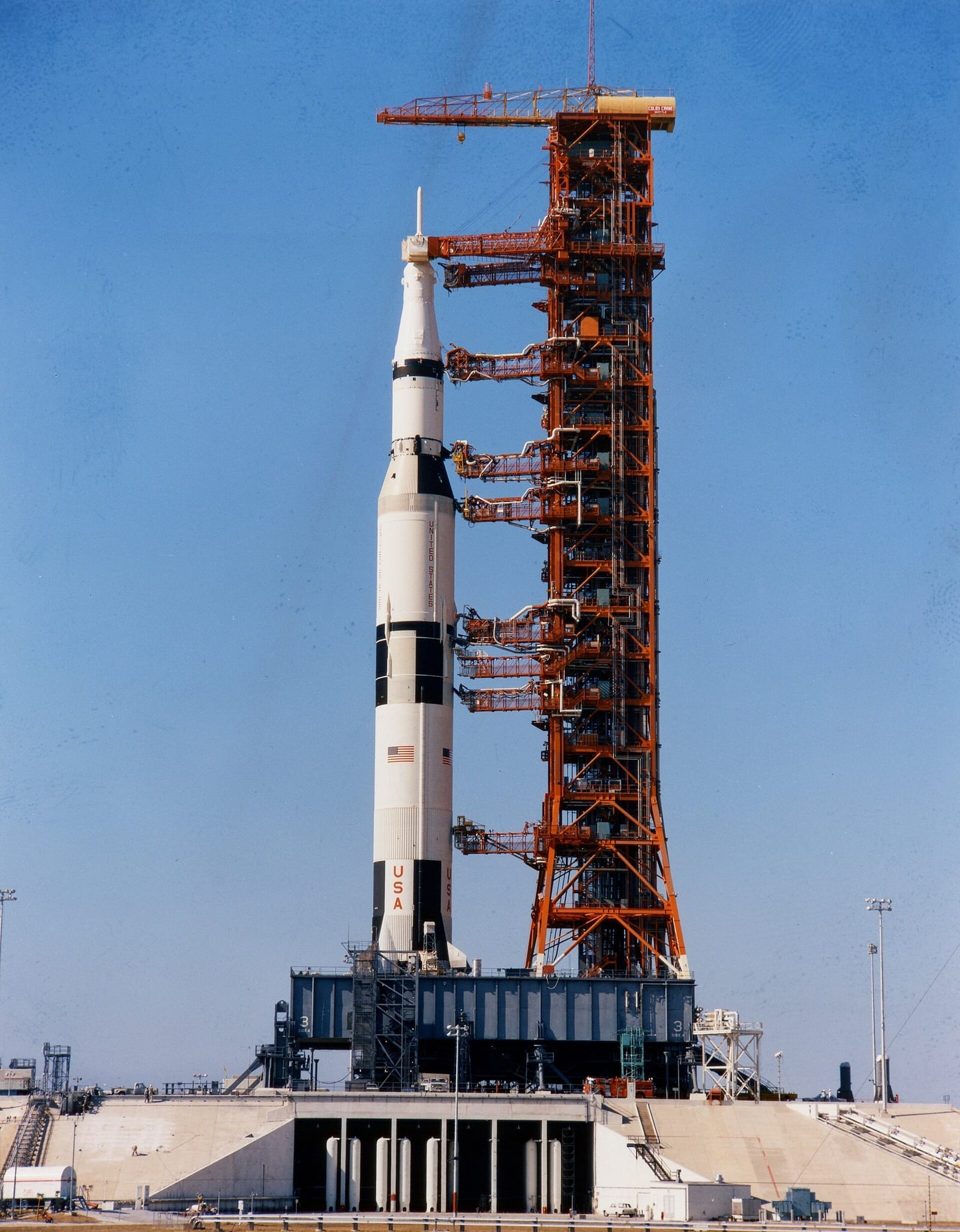
Adjusted into today’s money that total is on the order of a quarter-trillion dollars — commonly quoted around $260–280B, though the exact figure depends on the inflation method. The Planetary Society’s widely cited analysis puts the fully adjusted cost in that ballpark. Whichever adjustment you use, the takeaway is the same: reaching the Moon with 1960s technology was one of the most expensive peacetime projects in history.
04Artemis: today’s crewed programme
NASA’s Artemis programme is the modern successor to Apollo. The clearest cost figures come not from press releases but from the NASA Office of Inspector General (OIG), the agency’s independent auditor, which reviews spending in detail.
| Figure | Amount | Source |
|---|---|---|
| Artemis programme, FY2012–2025 | ~$93B | NASA Office of Inspector General |
| Cost per Artemis launch (SLS + Orion) | ~$4.1–4.2B | NASA Office of Inspector General |
| Apollo total (adjusted, estimate) | ~$260–280B | Planetary Society analysis |
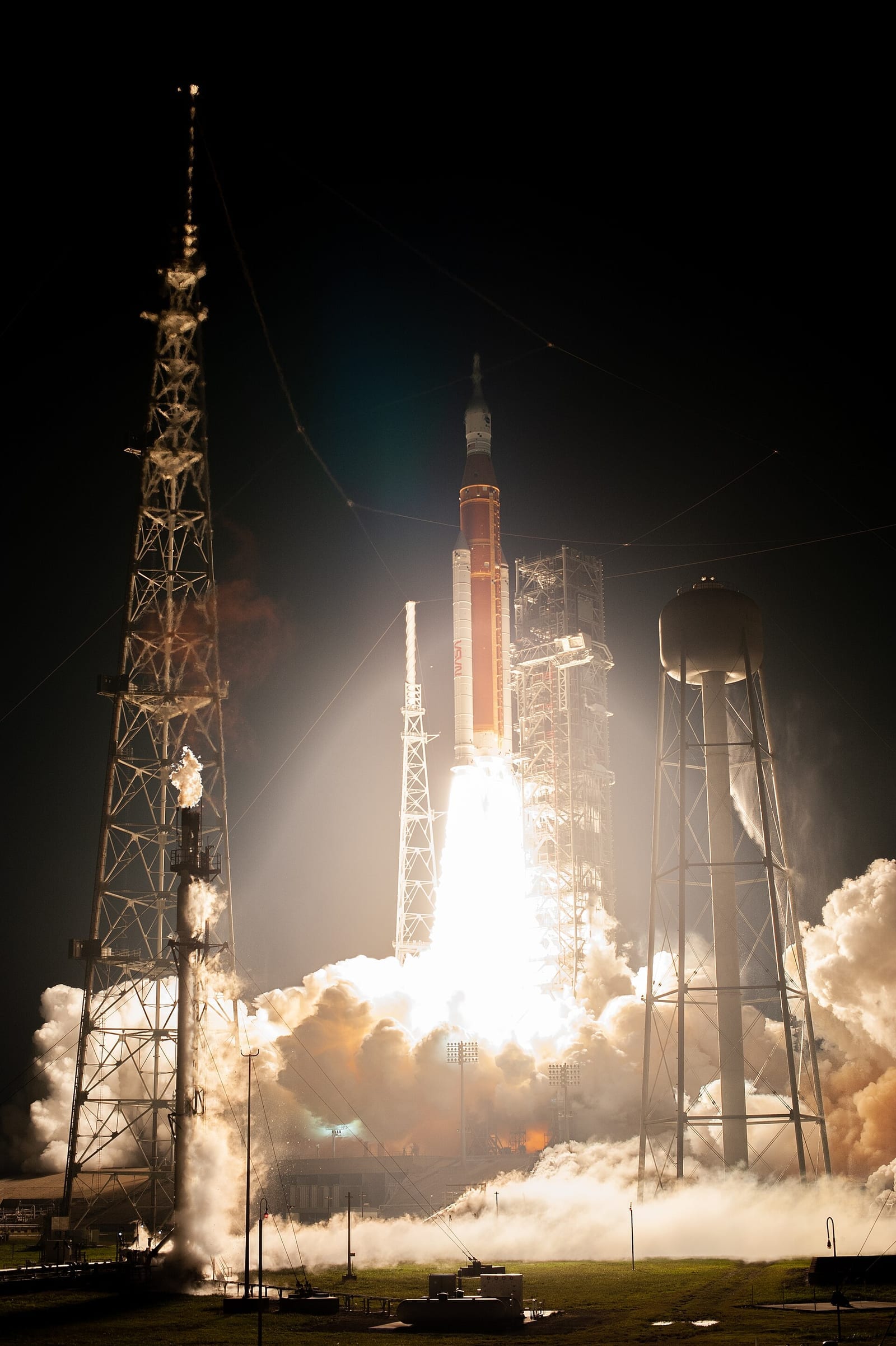
According to the OIG, NASA is spending roughly $93B on Artemis across fiscal years 2012 to 2025, and each Artemis launch — the Space Launch System rocket plus the Orion spacecraft — costs about $4.1–4.2B. Those figures cover only the launch vehicle and crew capsule, not the landers, spacesuits and ground systems, so the true cost of an Artemis landing mission is higher still. The OIG has repeatedly flagged these costs as a concern for the programme’s long-term sustainability.
05The cheap end: commercial robotic landers
Not every trip to the Moon needs a giant rocket and a crew. Under NASA’s Commercial Lunar Payload Services (CLPS) initiative, private companies build small robotic landers and NASA buys a ride for its instruments — a very different economic model from Apollo or Artemis.
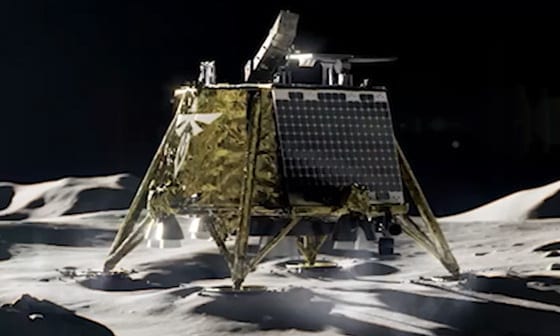
- Order of magnitude. Individual CLPS task orders have been on the order of $100M each — roughly $79M to $118M in the awards made public — a small fraction of a crewed mission.
- Shared risk. NASA accepts that some commercial landers will fail; the low per-mission price is part of the bargain. Buying results rather than owning the hardware is meant to drive costs down over time.
- Payload, not people. These landers carry science and technology payloads, not astronauts, which is why they can be so much cheaper.
06What makes it so expensive
Whether the bill is $100M or $90B, the same handful of drivers shape it. Understanding them explains why a crewed programme costs thousands of times more than a small lander.
- The rocket. Getting mass off Earth is the single biggest expense. A crew-rated heavy-lift rocket and its spacecraft dominate any human mission budget.
- Human safety. Keeping people alive — life support, redundancy, testing, abort systems — multiplies the cost compared with an uncrewed probe.
- Development and low flight rate. Years of design and testing are spread across only a few flights, so the "per launch" cost stays high while flights remain rare.
- Landers, suits and ground systems. The rocket is only part of the picture; surface hardware and mission control add billions more.
07How costs could come down
The direction of travel across the industry is toward cheaper access, though how far and how fast is uncertain. Several trends are aimed squarely at bringing the price of a lunar trip down.
- Reusable rockets. Recovering and re-flying hardware, rather than throwing it away each time, is the biggest lever on launch cost.
- Commercial competition. Fixed-price contracts and multiple providers, as in the CLPS model, push companies to cut costs to win work.
- Using local resources. If lunar water ice can be turned into propellant on-site, ships would not have to haul all their return fuel from Earth — a long-term way to cut the mass, and cost, of each mission.
08Is it worth the money?
Whether tens of billions of dollars is "worth it" is a judgement, not a fact — and reasonable people disagree. What is measurable is what the spending buys: scientific knowledge, technology that spreads into the wider economy, industrial capability, and a foothold for whatever comes next.
A share of the budget, not the whole pie
For perspective: even at its Apollo-era peak, NASA’s budget was a few percent of US federal spending, and today it is well under one percent. Lunar programmes are large in absolute dollars but small as a share of national budgets — a point worth keeping in view in any "is it worth it" debate.
09Frequently asked questions
How much does it cost to go to the Moon?
There is no single price. A small commercial robotic lander costs on the order of $100M, while a crewed government programme runs into the tens of billions — Apollo cost about $25.4B in 1960s dollars and NASA’s Artemis is around $93B through 2025 according to the agency’s Inspector General.
How much did the Apollo programme cost?
About $25.4B in the dollars of the 1960s and early 1970s. Adjusted to today’s money that is on the order of $260–280B, depending on the inflation method used — one of the most expensive peacetime projects ever.
Why do estimates of Apollo’s cost differ?
Mostly because of inflation adjustment and scope. The ~$25.4B figure is in period dollars; converting it to today’s money depends on the method and base year, and analyses also differ on what they count as part of the programme.
How much does the Artemis programme cost?
The NASA Office of Inspector General estimates about $93B across fiscal years 2012 to 2025. That is the programme total; individual figures for landers and other elements sit on top of the launch costs.
How much does a single Artemis launch cost?
The NASA Inspector General puts each Artemis launch — the SLS rocket plus the Orion spacecraft — at about $4.1–4.2B. That covers the rocket and capsule only, not the lander, spacesuits or ground systems.
Why is a crewed Moon mission so much more expensive than a robotic one?
Keeping people alive drives up the cost enormously: life support, redundancy, abort systems, extensive testing, plus a large crew-rated rocket and spacecraft. A robotic lander carries instruments, not people, so it can be far smaller and cheaper.
How much does a commercial CLPS lander cost?
On the order of $100M per mission — the public task orders have ranged roughly from $79M to $118M. NASA buys the delivery service rather than owning the lander, and accepts that some attempts will fail.
Who pays for going to the Moon?
Crewed programmes like Apollo and Artemis are funded by national space agencies from public budgets. Commercial landers are typically paid for through agency contracts, sometimes with additional private or commercial payloads sharing the ride.
How does the cost of going to the Moon compare with going to Mars?
The Moon is far cheaper per crewed mission because the trip is days rather than months, communication is near-instant, and no long-duration deep-space life support is needed. A Mars mission adds years of transit and vastly more consumables and shielding.
Is the money spent on the Moon "wasted"?
That is a value judgement. What the spending buys is measurable — scientific data, technology that spreads into the wider economy, industrial capability and jobs — but whether it is worth it is a matter of policy and opinion.
What share of the national budget goes to space?
Even at the Apollo peak, NASA was only a few percent of US federal spending, and today it is well under one percent. Lunar programmes are large in absolute dollars but small as a share of overall budgets.
Could reusable rockets make Moon trips cheaper?
Potentially, yes. Reusing rather than discarding hardware is the biggest single lever on launch cost. How much it lowers the total price of a lunar mission over time is still being demonstrated.
Could using lunar resources reduce mission costs?
In the long term. If water ice at the poles can be processed into oxygen and hydrogen propellant on-site, ships would not have to carry all their return fuel from Earth — cutting launch mass and, in principle, cost. This remains a goal, not a proven capability.
Are the cost figures in this guide exact?
They are the best available estimates, attributed to their sources — NASA, the NASA Office of Inspector General, and independent analyses. Historical totals depend on inflation adjustment and scope, and forward-looking figures change with schedules, so treat them as informed estimates rather than fixed prices.