01The quick answer
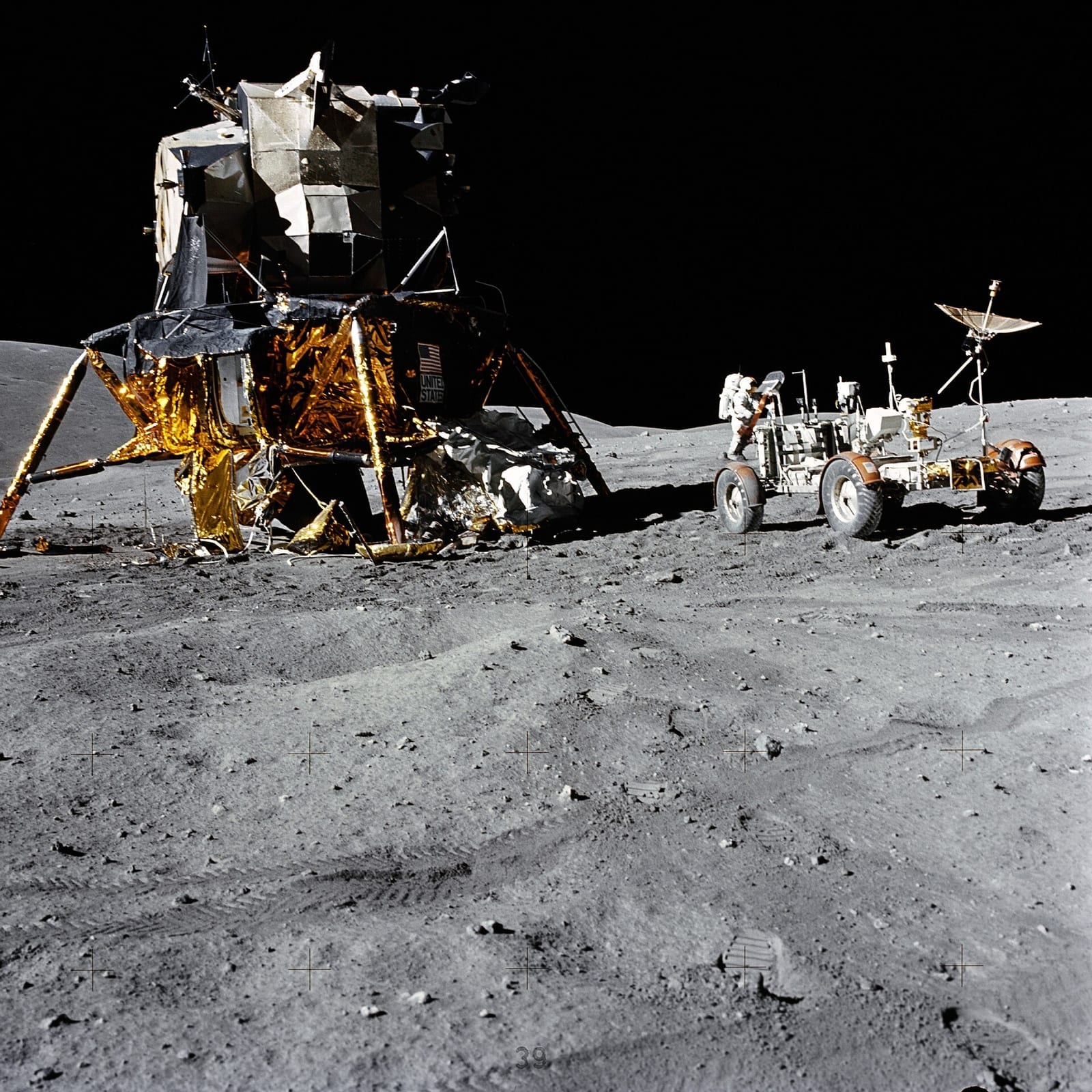
The Moon has no atmosphere and no global magnetic field — the two things that protect life on Earth from space radiation. As a result, anyone on the lunar surface is exposed to a steady rain of high-energy particles, plus the risk of a dangerous surge during a solar storm.
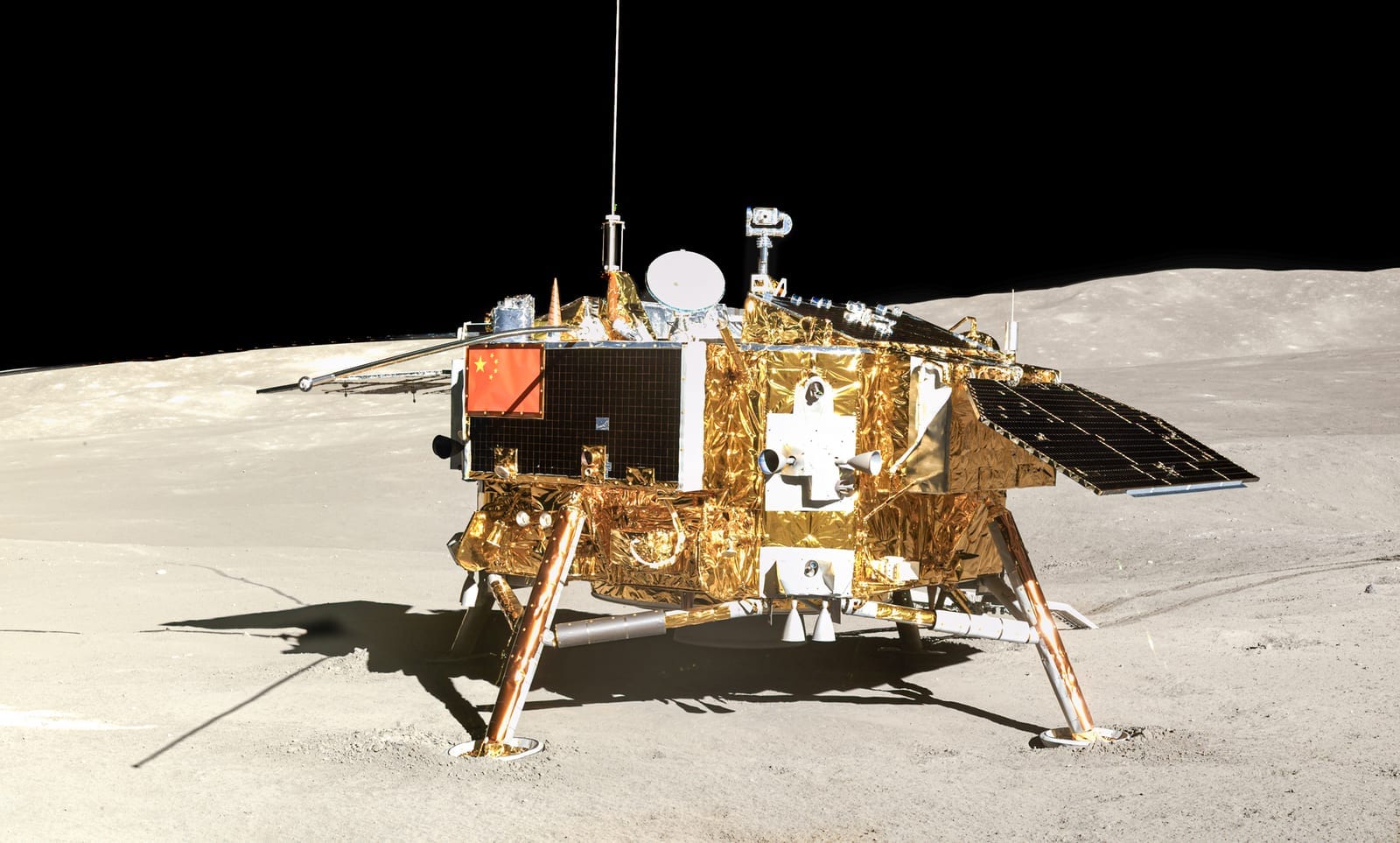
The dose is serious but not instantly lethal. Measurements from China’s Chang’e-4 lander recorded an average of roughly 1,369 microsieverts per day on the surface — around two to three times the rate astronauts experience on the International Space Station, and hundreds of times a typical day on Earth’s surface. It is a hazard to be managed carefully over a mission, not one that kills on contact.
02Why the Moon is so exposed
On Earth we live at the bottom of two protective layers. A thick atmosphere absorbs most incoming radiation, and a strong global magnetic field deflects charged particles from the Sun and deep space. The Moon has effectively neither.
The Moon has only the barest trace of an atmosphere — far too thin to stop anything — and no global magnetic field to steer particles away. So radiation that would never reach the ground on Earth strikes the lunar surface directly. The one natural shield the Moon does offer is its own bulk: standing on the surface, the ground beneath your feet blocks radiation coming from below, so you receive roughly half the dose of open deep space.
03Two kinds of space radiation
The hazard comes in two very different forms, and they call for different defences.
- Galactic cosmic rays (GCR). A constant, low-level flux of extremely high-energy particles arriving from across the galaxy. They are hard to stop — thin shielding can even make the dose worse by shattering particles into secondary showers — and they are the main driver of long-term dose.
- Solar particle events (SPE). Sudden bursts of particles flung out by solar flares and eruptions. Most of the time the Sun is quiet, but during a large event the dose can spike within hours to levels that are acutely dangerous — potentially life-threatening for an unshielded crew.
Slow burn vs sudden storm
GCR is the slow, chronic background that raises long-term cancer risk; SPE is the acute threat that a mission must be able to hide from fast. A lunar base needs to handle both: steady shielding against cosmic rays, and a "storm shelter" the crew can reach quickly when the Sun acts up.
04What the measurements show
For decades the surface dose could only be estimated. That changed when instruments began measuring it directly, from orbit and then on the ground.
| Source / instrument | What it measured | Rough dose |
|---|---|---|
| LRO / CRaTER | Radiation environment from lunar orbit | Baseline for GCR and SPE |
| Chang’e-4 / LND (2019) | First direct surface dose | ~1,369 µSv/day |
| ISS (low Earth orbit) | Astronaut dose for comparison | Roughly 2–3× lower than the Moon |
| Earth’s surface | Everyday background | Hundreds of times lower |
NASA’s Lunar Reconnaissance Orbiter carries CRaTER (the Cosmic Ray Telescope for the Effects of Radiation), which has characterised the radiation environment from lunar orbit for years. The landmark surface figure, though, comes from China’s Chang’e-4: its Lunar Lander Neutron and Dosimetry (LND) instrument, operating on the far side from 2019, measured an average equivalent dose of about 1,369 microsieverts per day — the first direct measurement on the surface, reported in the journal Science Advances. That is roughly two to three times the daily dose on the ISS and hundreds of times a normal day on Earth.
05What it does to the body
Radiation harms the body in two broad ways, matching the two kinds of exposure. Understanding the difference is key to why mission planners treat cosmic rays and solar storms so differently.
- Long-term risk from cumulative dose. Steady GCR exposure over months and years raises the lifetime risk of cancer and can damage the cardiovascular and central nervous systems. This is a statistical risk that grows with total dose, not a sudden illness.
- Acute sickness from a big dose fast. A large solar particle event, absorbed without shelter, could deliver enough dose in hours to cause acute radiation sickness — nausea, damage to blood-forming tissue, and in a severe case a threat to life.
06Shielding: regolith and lava tubes
The most effective shield against space radiation is simply mass — putting matter between the crew and the sky. On the Moon the cheapest mass is the ground itself, and the leading base concepts lean heavily on it rather than on hauling shielding from Earth.
- Burying habitats under regolith. Covering a habitat with a few metres of lunar soil dramatically cuts the dose, blocking most cosmic rays and shielding against solar storms. Piling regolith over modules is one of the most studied base designs.
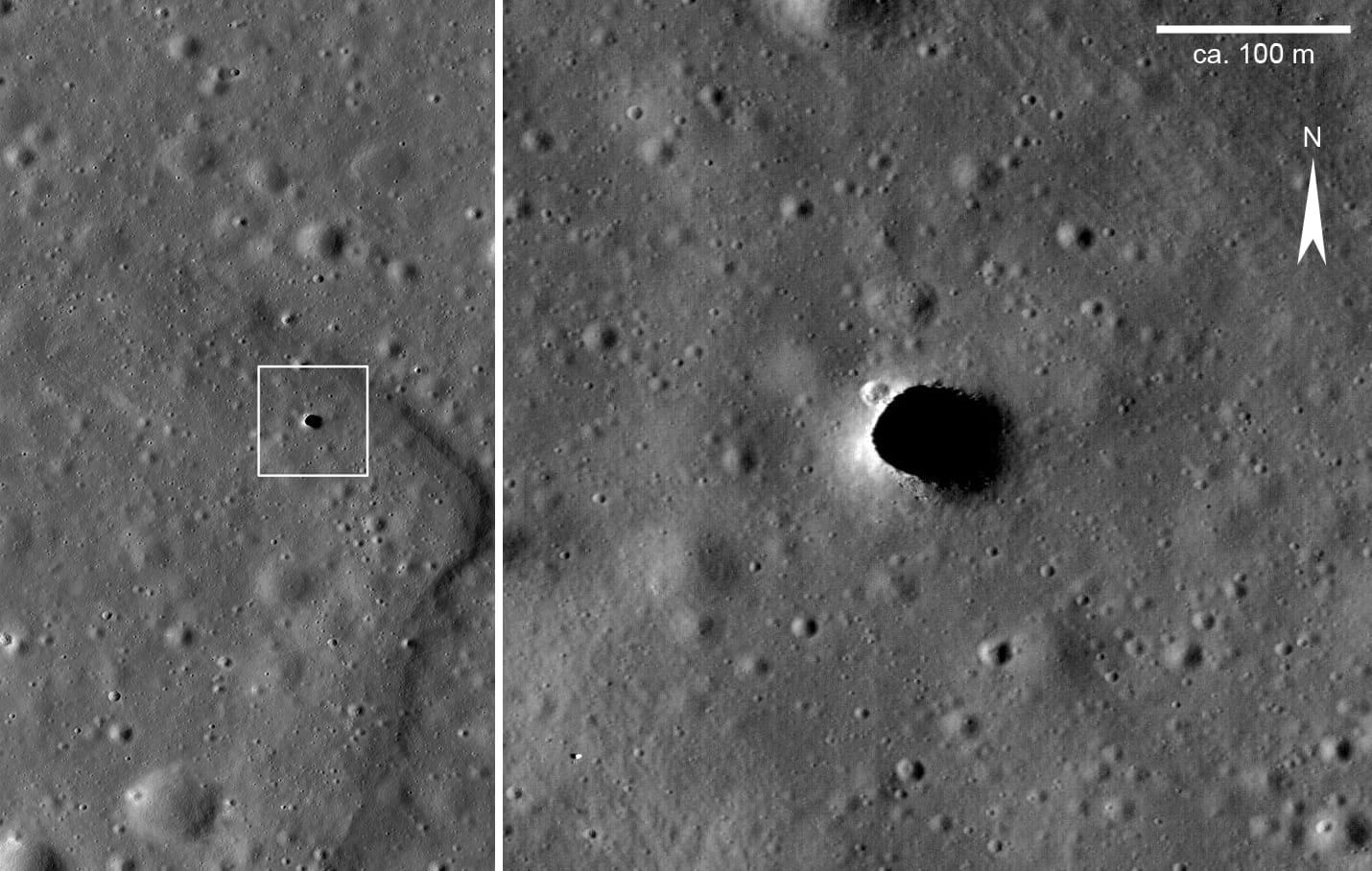
- Lava tubes. The Moon has natural underground tunnels — lava tubes — left by ancient volcanic activity. A base placed inside one would sit under tens of metres of rock, shielded from radiation, micrometeorites and temperature swings at once.
- A storm shelter. Even without burying the whole base, crews need a small, heavily shielded refuge — surrounded by water, regolith or supplies — that they can reach fast when a solar particle event is detected.
07Transit vs surface exposure
Radiation is not only a surface problem. The three-day journey each way also exposes the crew, and in some respects the transit is the more vulnerable phase: out in open space, away from the shielding bulk of the Moon, the spacecraft catches radiation from all directions rather than just the sky above.
The saving grace is that the lunar trip is short. Because a crew spends only days in transit — not the months a Mars flight demands — the total dose racked up on the way is modest compared with an interplanetary mission. The real danger during transit is timing: a large solar storm striking while the ship is between Earth and Moon, with only the spacecraft’s own walls for protection.
08How missions manage the risk
Radiation is a manageable hazard rather than a showstopper, precisely because lunar missions are short and Earth is close. Agencies combine several measures to keep the dose within acceptable limits.
- Short stays and dose limits. Keeping missions short and tracking each astronaut’s cumulative dose against defined limits caps long-term risk.
- Space-weather forecasting. Monitoring the Sun gives warning of solar storms so crews can take shelter before an event hits.
- Shelter and shielding. A storm shelter on the surface or in the ship, plus regolith cover or lava tubes for longer stays, protects against the acute threat.
- Monitoring and dosimetry. Personal dosimeters and instruments track exposure in real time so mission control can respond.
09Frequently asked questions
How dangerous is radiation on the Moon?
It is a serious long-term hazard but not instantly lethal. The measured surface dose is roughly 1,369 microsieverts per day — about two to three times the ISS rate — which raises cancer risk over time and must be managed with short stays and shielding. A large solar storm without shelter would be far more dangerous.
Why is the Moon so exposed to radiation?
Because it has no atmosphere to absorb radiation and no global magnetic field to deflect charged particles — the two shields that protect life on Earth. Space radiation reaches the lunar surface almost unimpeded.
What is the radiation dose on the lunar surface?
About 1,369 microsieverts per day, according to the LND instrument on China’s Chang’e-4 lander — the first direct measurement on the surface, published in Science Advances in 2020. That is roughly two to three times the ISS dose.
How does lunar radiation compare with the ISS?
The lunar surface dose is roughly two to three times higher than what astronauts receive aboard the International Space Station, which orbits inside part of Earth’s protective magnetic field.
What are galactic cosmic rays?
A constant flux of extremely high-energy particles arriving from across the galaxy. They are difficult to stop and are the main contributor to the long-term radiation dose. Thin shielding can even worsen the dose by creating secondary particle showers.
What is a solar particle event?
A sudden burst of particles thrown out by a solar flare or eruption. Most of the time the Sun is quiet, but a large event can spike the dose within hours to acutely dangerous — even life-threatening — levels for an unshielded crew.
What did Chang’e-4 measure?
Its Lunar Lander Neutron and Dosimetry (LND) instrument made the first direct measurement of the radiation dose on the lunar surface, from the far side beginning in 2019 — averaging about 1,369 microsieverts per day.
What is CRaTER?
The Cosmic Ray Telescope for the Effects of Radiation, an instrument on NASA’s Lunar Reconnaissance Orbiter that has characterised the radiation environment around the Moon from orbit for years, providing baseline data on cosmic rays and solar events.
How can astronauts be protected from radiation on the Moon?
Mainly with mass. Covering habitats with a few metres of lunar regolith, or placing a base inside a lava tube under tens of metres of rock, blocks most of the dose. Crews also need a quickly reachable storm shelter for solar events.
Would a few metres of regolith really help?
Yes. A few metres of lunar soil piled over a habitat dramatically reduces the dose, blocking most galactic cosmic rays and shielding against solar storms. It is one of the most studied approaches because the material is already there.
Are lava tubes useful for radiation protection?
Very. These natural underground tunnels lie beneath tens of metres of rock, offering ready-made shielding from radiation, micrometeorites and extreme temperature swings all at once — which is why they are of great interest for future bases.
Is radiation worse on the way to the Moon or on the surface?
In open space during transit the spacecraft is hit from all directions, whereas on the surface the ground blocks radiation from below. But the lunar trip is only days long, so the total transit dose stays modest — the real transit danger is a solar storm striking while the ship is exposed.
Did the Apollo astronauts get sick from radiation?
No. Apollo missions were short and, by good fortune, none coincided with a major solar particle event. A large storm during a lunar mission remains one of the key risks that modern missions plan around.
Is radiation a reason we cannot live on the Moon?
No — it is a serious challenge, not a barrier. With regolith cover or lava tubes for shelter, dose limits, space-weather warnings and short stays, radiation can be managed. It is one of several problems a lasting base must engineer around.