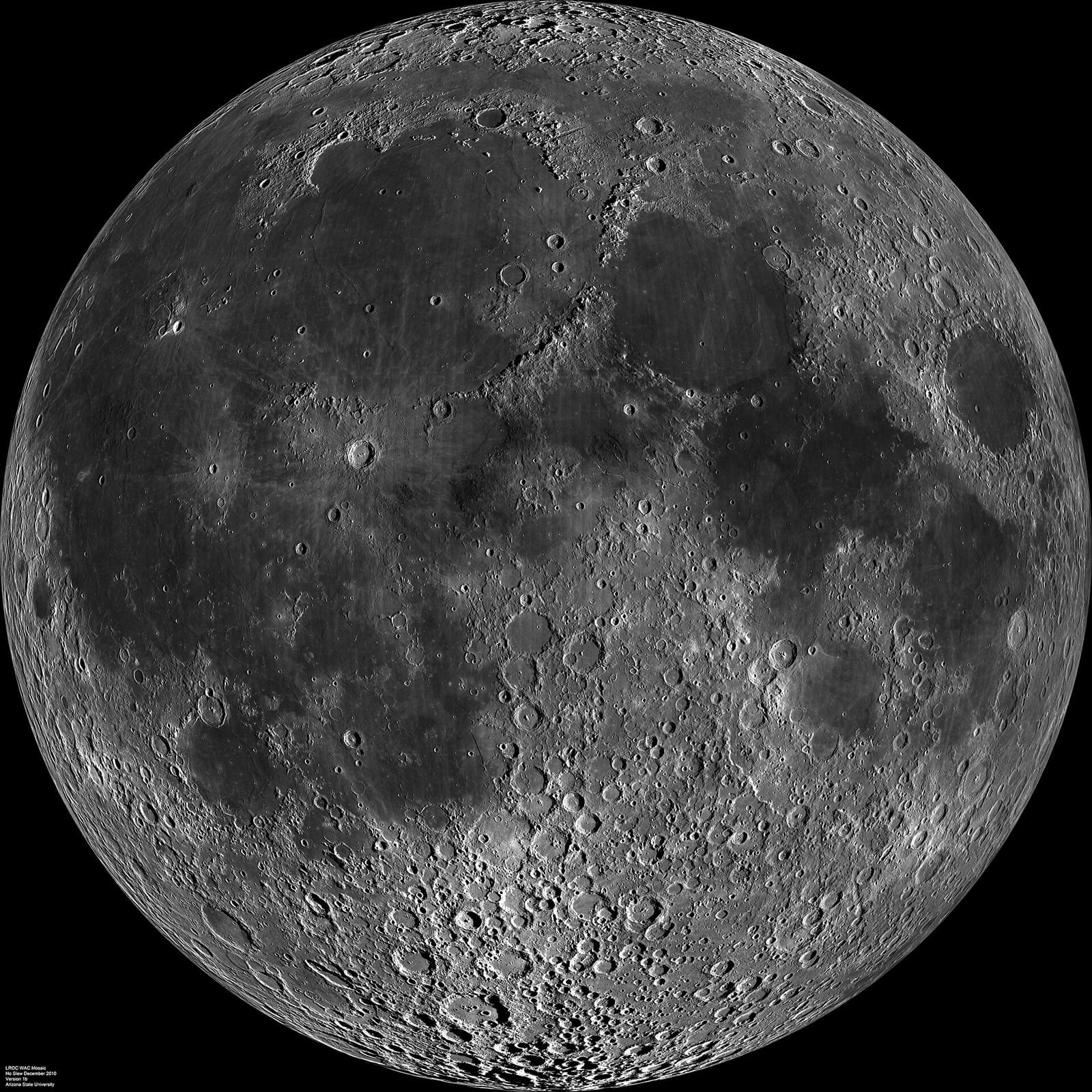
01The quick answer
A crewed trip to the Moon takes about three days one way. That is what every Apollo mission clocked on the outbound leg, and roughly what NASA plans for Artemis crews. Unlike Mars, the Moon orbits Earth rather than the Sun, so there is no rare launch window — you can leave for the Moon many times a year.
The exact number depends on the trajectory you choose. Robotic missions have taken as little as about nine hours to fly past the Moon and as long as several weeks when they follow a fuel-saving, looping path. Three days is the practical middle ground crewed missions favour — fast enough to keep the crew safe, gentle enough to arrive with fuel to spare.
02Why days, not hours
The Moon is close by cosmic standards, but it is still nearly 400,000 km away — about thirty Earths lined up in a row. A ship does not fly there in a straight line at constant speed. It fires its engine near Earth to enter a long, coasting orbit, then spends most of the trip drifting outward while Earth’s gravity gradually slows it down. Only near the end does it speed back up as it falls toward the Moon.
Going faster is possible, but it costs fuel at both ends. A higher-energy launch shortens the trip, yet the ship then arrives moving so fast that it needs even more fuel to brake into lunar orbit — otherwise it simply flies past. That trade-off between speed at departure and fuel for arrival is what pins a crewed lunar transit near the three-day mark.
No 26-month wait, unlike Mars
Because the Moon circles Earth roughly every 27 days rather than orbiting the Sun, favourable departure opportunities come around often — many times a year, not once every couple of years. Mission planners still pick their moment carefully, but the Moon is always "in reach" in a way Mars never is.
03How Apollo did it: about three days
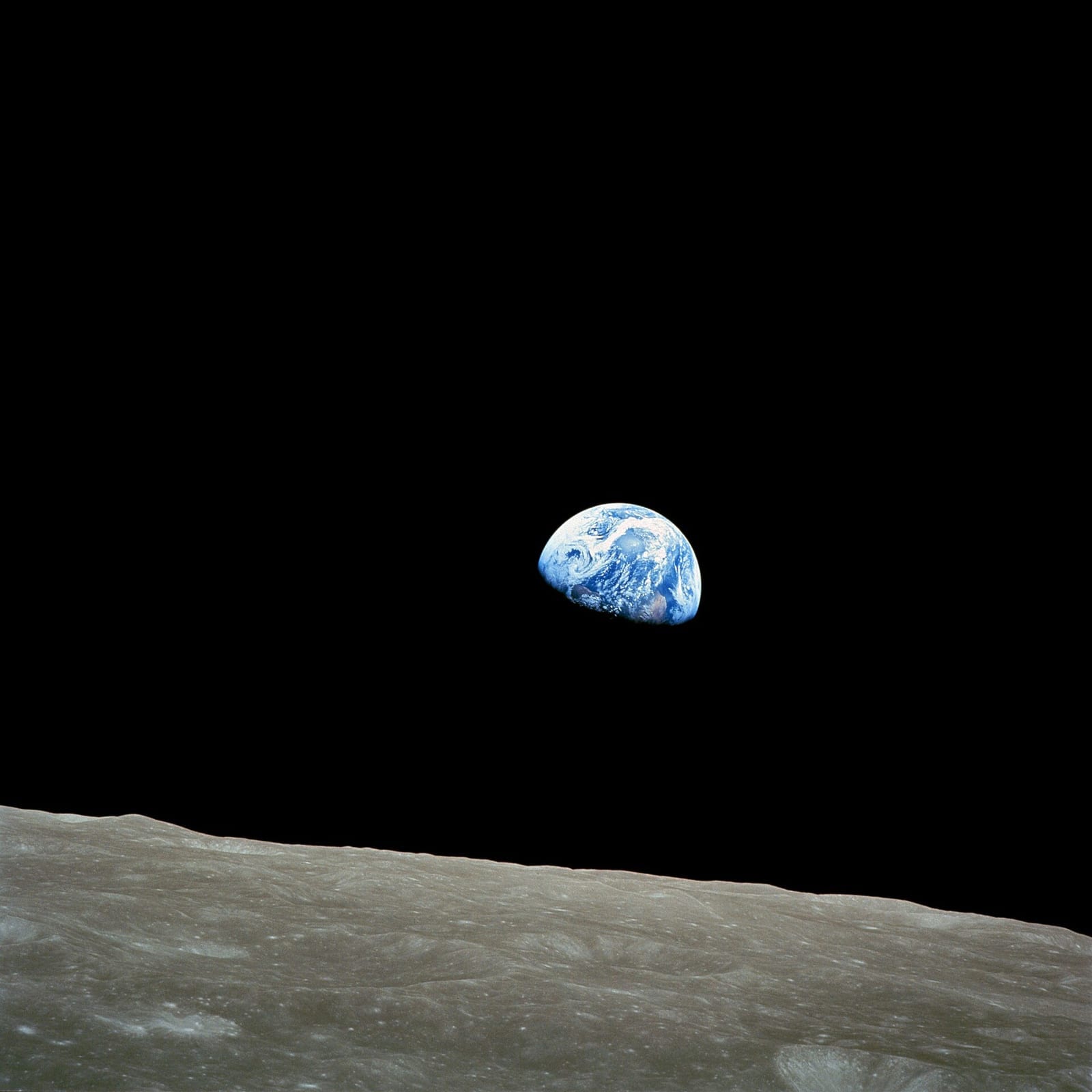
Every crewed lunar landing so far used the same recipe: reach low Earth orbit, then fire the upper stage for a manoeuvre called trans-lunar injection (TLI) that flings the craft toward the Moon. From there it coasted for roughly three days before slipping into lunar orbit.
| Mission | Launched | Lunar orbit | Outbound transit |
|---|---|---|---|
| Apollo 8 | 21 Dec 1968 | 24 Dec 1968 | ~69 h (~2.9 days) |
| Apollo 11 | 16 Jul 1969 | 19 Jul 1969 | ~76 h (~3.1 days) |
| Apollo 17 | 7 Dec 1972 | 10 Dec 1972 | ~2.9 days |
Apollo 11 launched on 16 July 1969 and slid into lunar orbit about 76 hours later, on 19 July, with the first landing the next day. The pattern held across the programme: roughly three days out, and about the same coming home.
04How far the Moon actually is
The Moon’s orbit is an ellipse, so the distance changes through each month. On average the Moon sits about 384,400 km from Earth. At perigee — its closest point — it comes to roughly 363,300 km; at apogee — its farthest — it retreats to about 405,500 km. That is why a "supermoon" (a full Moon near perigee) looks slightly larger than usual.
Because light and radio travel at the same speed, a signal crosses that gap in only about 1.28 seconds one way — near-instant compared with the 3-to-22-minute delay to Mars. A round-trip radio exchange with the Moon takes only around 2.6 seconds, so Earth-based controllers can hold what feels almost like a live conversation with a lunar crew.
05Fast fly-bys vs slow, fuel-saving routes
Robotic missions show just how wide the range of "travel time to the Moon" really is, because a probe can be tuned for speed or for fuel economy depending on where it is ultimately headed.
- The fast extreme: New Horizons. On its way to Pluto, NASA’s New Horizons was launched so hard that it crossed the Moon’s orbital distance in only about 8.5–9 hours. But it never stopped — it blew straight past, because it was not trying to enter lunar orbit.
- The slow extreme: ballistic lunar transfers. Missions like NASA’s CAPSTONE take a long, looping "ballistic lunar transfer" (BLT) that borrows energy from the Sun’s gravity to save fuel. CAPSTONE launched in mid-2022 and did not arrive in its lunar orbit until about four and a half months later.
- The crewed middle: direct transfers. A crewed ship threads between these extremes with a direct three-day transfer — quick enough for safety, but braking gently into orbit rather than tearing past.
Why cargo can go slow but crews cannot
A robotic lander or a cargo tug can afford to spend weeks on a fuel-saving path, since there is no one aboard to feed, protect from radiation, or bring home. A crewed vehicle cannot: every extra day adds life-support demand and radiation exposure, so speed matters more than squeezing out the last drop of fuel efficiency.
06Why crewed missions choose ~3 days
For a crew, the three-day transfer is a deliberate balance of safety and physics. It is short enough that the ship carries only a few days of consumables for the cruise, keeps radiation exposure during transit low, and leaves a clear path home. It is also gentle enough that the spacecraft can brake into lunar orbit without needing an impractical amount of fuel.
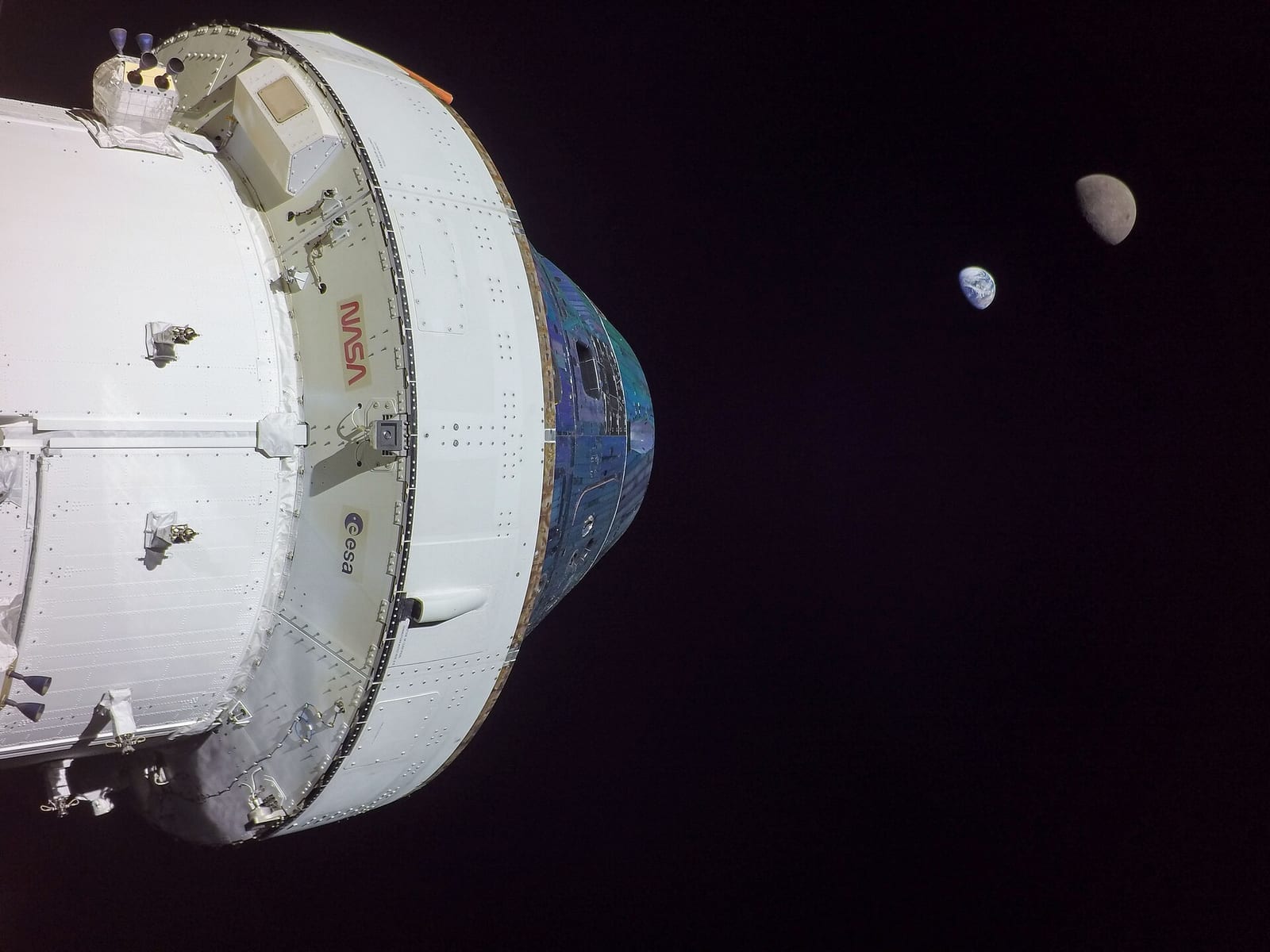
Artemis follows the same logic. NASA’s Orion spacecraft is designed to carry crews to lunar orbit on a transit measured in days, not weeks — the same broad approach as Apollo, updated with modern hardware. The exact profile varies with the mission, but the three-day figure remains a good rule of thumb.
07Free-return trajectories: a safety net
Early Apollo missions launched onto a "free-return" trajectory — a path shaped so that if the main engine failed, the Moon’s gravity would sling the ship back toward Earth on its own, with no further engine burn required. It trades a little efficiency for a powerful safety guarantee on the way out.
Apollo 13: the free return that saved a crew
When an oxygen tank ruptured on Apollo 13 in 1970, the crew could not land — but the mission was manoeuvred onto a free-return path around the Moon, letting the astronauts loop behind it and coast home. It remains the most famous demonstration of why this trajectory matters.
08Communication and life aboard
Because the Moon is so close, the communication delay is tiny — about 1.28 seconds each way, or roughly 2.6 seconds for a round trip. Astronauts can talk with mission control almost as if by long-distance phone, and controllers can help fly critical manoeuvres in something close to real time. This is a world apart from Mars, where a single message can take up to 22 minutes.
- Short exposure. A three-day cruise means only a few days of deep-space radiation on each leg, though a solar storm during transit is still a serious hazard to plan for.
- Quick abort options. With Earth so near, crews have realistic ways to turn back or come home fast if something goes wrong — impossible on a Mars flight.
- Modest consumables. Only a few days of air, water and food are needed for the transit itself, keeping the ship lighter than an interplanetary craft.
09Frequently asked questions
How long does it take to get to the Moon?
For a crewed spacecraft, about three days one way — that is what every Apollo mission took. Artemis II, launched on 1 April 2026, reached its lunar flyby on 6 April, about five days out, because its free-return path swung much farther from the Moon. Robotic probes can be faster or much slower depending on their trajectory.
How long did Apollo 11 take to reach the Moon?
Apollo 11 launched on 16 July 1969 and entered lunar orbit about 76 hours (a little over three days) later, on 19 July, landing the following day.
What is the fastest anything has reached the Moon?
NASA’s New Horizons probe, launched toward Pluto in 2006, crossed the Moon’s orbital distance in only about 8.5–9 hours. But it flew straight past without stopping — reaching lunar orbit takes much longer because the craft must slow down.
Why can a probe reach the Moon in hours but a crew takes three days?
A fast probe like New Horizons just flies past. A crewed ship has to slow down and enter lunar orbit, which requires braking fuel. A gentler three-day transfer arrives slowly enough to brake without carrying an impractical amount of propellant.
Why did CAPSTONE take months to get to the Moon?
CAPSTONE used a ballistic lunar transfer, a long looping path that borrows energy from the Sun’s gravity to save fuel. It launched in mid-2022 and reached its lunar orbit about four and a half months later. The slow route trades time for propellant savings.
How far away is the Moon?
On average about 384,400 km. Because the orbit is elliptical it ranges from roughly 363,300 km at perigee (closest) to about 405,500 km at apogee (farthest).
How long does a radio signal take to reach the Moon?
About 1.28 seconds one way, so roughly 2.6 seconds for a round trip. That is why controllers on Earth can hold a nearly live conversation with a lunar crew — very different from the minutes-long delay to Mars.
Is there a launch window to the Moon like there is for Mars?
Not in the same restrictive way. The Moon orbits Earth about every 27 days, so favourable departure opportunities recur many times a year rather than once every 26 months as with Mars.
What is a free-return trajectory?
A path shaped so the Moon’s gravity would sling the ship back toward Earth even if the engine failed, needing no further burn. Apollo used it as a safety measure, and it famously helped bring the Apollo 13 crew home.
How long does Artemis take to reach the Moon?
Days, not weeks. Artemis II launched on 1 April 2026 and made its lunar flyby on 6 April — about five days out on a free-return path. Missions that stop in lunar orbit follow a different profile, so exact times vary.
How long does the return trip from the Moon take?
Roughly the same as the outbound leg — about three days for a crewed mission. Apollo crews spent a few days getting there, time on or around the Moon, then about three days coming home.
Could future engines get us to the Moon faster?
In principle a higher-energy trajectory or more capable propulsion could shorten a crewed transit, but the limit is arrival: you still need fuel to brake into lunar orbit. For crews, three days is already a sensible balance, so there is less pressure to go faster than there is for Mars.
Is the trip to the Moon dangerous?
It carries real risk — launch and re-entry, deep-space radiation and the chance of a solar storm during transit — but the short duration and near-instant communication make it far more manageable than a journey to Mars.