01The lunar technology stack
Landing on the Moon for a weekend was solved in the 1960s. Living there — visiting the same site repeatedly, near the poles, and eventually staying — is a much harder engineering problem that no one has yet demonstrated end to end. The systems below are the ones a sustained lunar presence depends on, and most are in active development rather than flight-proven.
02Landers: HLS and commercial CLPS
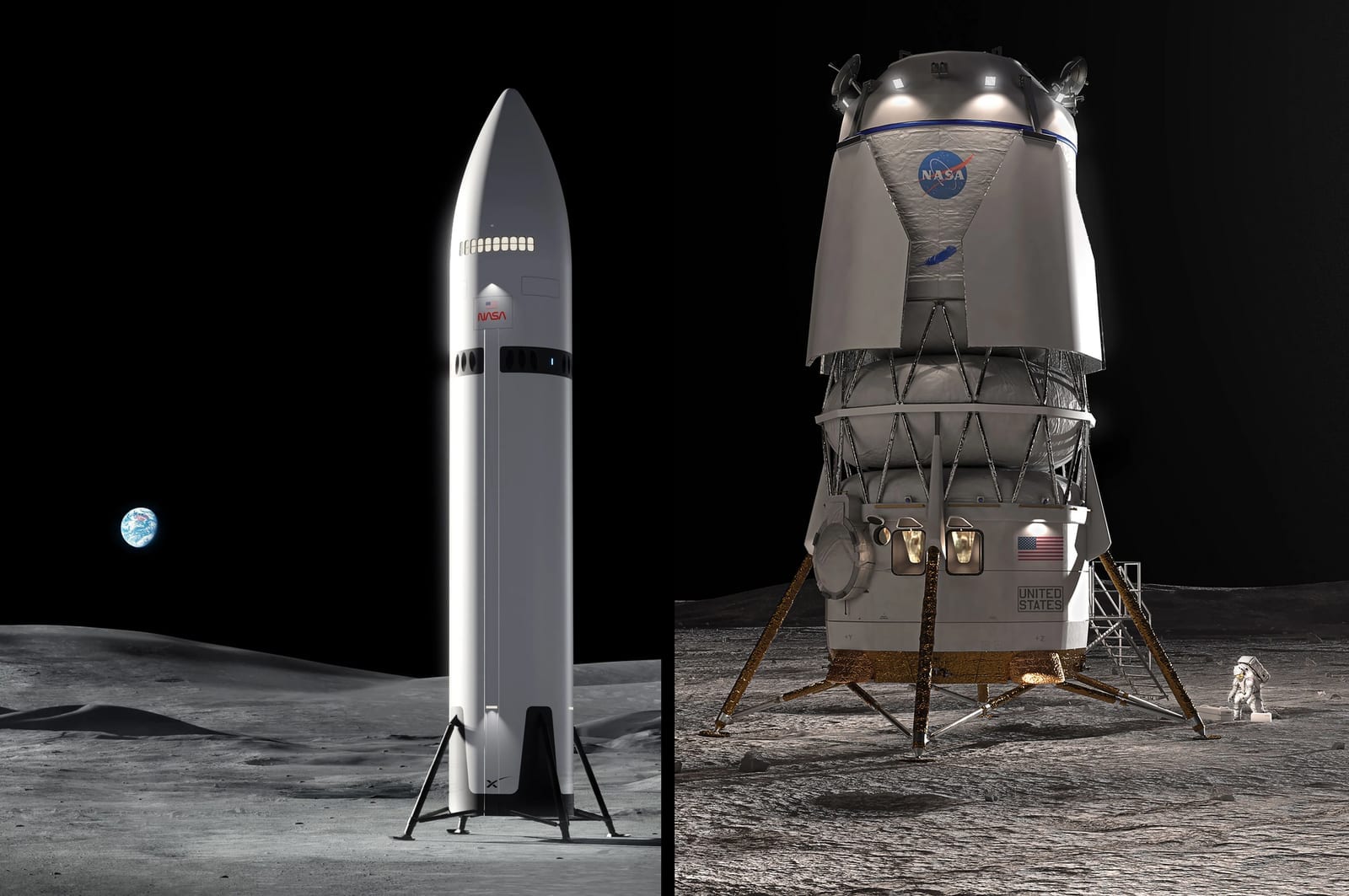
Two very different classes of lander matter. Large crewed landers — NASA’s Human Landing System (HLS) — carry astronauts from lunar orbit to the surface and back. Small robotic landers under the Commercial Lunar Payload Services (CLPS) program deliver instruments and cargo more cheaply and more often.
Human Landing System (HLS)
- Starship HLS — a lunar variant of SpaceX’s Starship, selected by NASA in 2021 as the first crewed lander. It reaches the Moon after in-orbit refuelling and lands the crew from lunar orbit.
- Blue Moon — Blue Origin’s lander, selected in 2023 as a second HLS provider, giving NASA two independent crewed landers (a cargo version comes first, then a crewed one).
Commercial CLPS landers
- Intuitive Machines’ Odysseus (IM-1) made the first US soft landing since Apollo, and the first by a commercial vehicle, in February 2024.
- Firefly Aerospace’s Blue Ghost landed successfully in 2025, showing the CLPS model maturing.
- Not every attempt succeeds — early CLPS flights included failures and tip-overs, which is expected in a low-cost, high-cadence program.
03Precision and hazard-relative landing
The polar terrain crews want to reach is rough, dimly lit and full of boulders and shadowed craters. Landing there safely needs the spacecraft to know exactly where it is and to pick a clear spot on its own during descent.
- Terrain-relative navigation — matching live camera images against onboard maps to fix position without GPS.
- Hazard-relative and hazard-avoidance systems — lidar and cameras that scan the landing zone in real time and steer around rocks and slopes.
- These build on landing technology proven at Mars and are being adapted to the harsher lighting and terrain of the lunar poles.
04Spacesuits for the surface
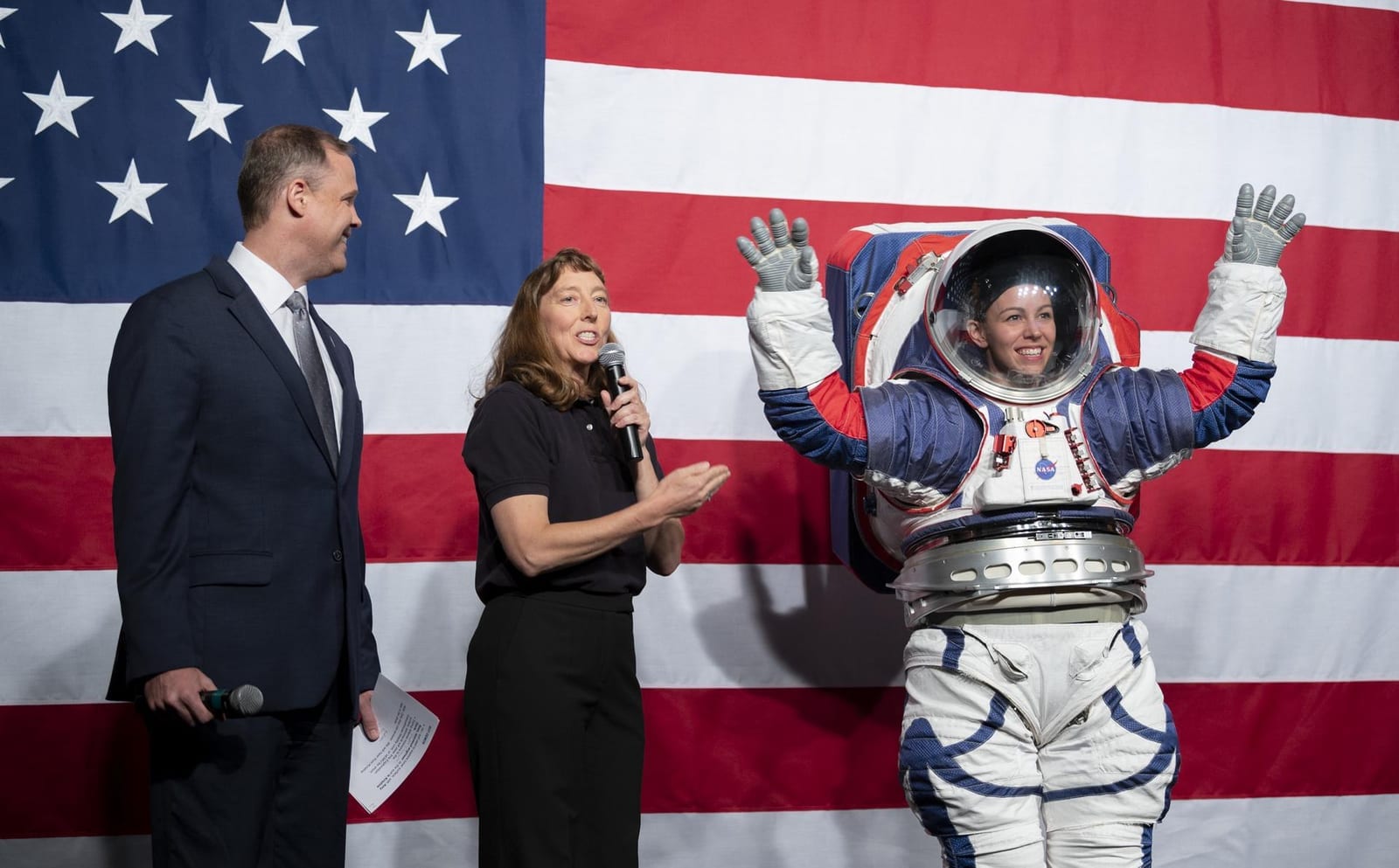
Apollo suits worked for a few short walks but were stiff, wore out fast and let dust in. Artemis surface EVAs need suits that flex enough to kneel and work, keep abrasive dust out of joints and seals, and hold up through the extreme cold of shadowed regions.
- Axiom Space’s AxEMU — the suit NASA contracted for the first Artemis surface landing, designed for the south-polar environment and greater mobility.
- Collins Aerospace held a parallel xEVA services contract aimed largely at the microgravity suit for the space station.
- Both were awarded under a services model, in which companies own and lease the suits rather than NASA building them in-house.
05Rovers: unpressurized and pressurized
Range multiplies what a crew can explore and where a base can draw resources. Two rover classes are planned.
- Lunar Terrain Vehicle (LTV) — an unpressurized, open “Moon buggy” for suited astronauts on short trips. In 2024 NASA selected three companies (Intuitive Machines, Lunar Outpost and Venturi Astrolab) to develop LTV concepts, with the vehicle also able to operate robotically between crews.
- Pressurized rover — a mobile habitat that lets crews drive for days without suits. Under a 2024 NASA–JAXA agreement, Japan (with Toyota) is to provide this “Lunar Cruiser” in exchange for Japanese astronaut flights.
06Communications and PNT without GPS
Earth’s GPS satellites do not usefully cover the Moon, and the far side and polar craters can’t see Earth directly. Lunar missions therefore need their own positioning, navigation and timing (PNT) and relay infrastructure.
- LunaNet — NASA’s set of interoperability standards so comms and navigation services from many providers work as one “lunar internet”.
- Lunar relay satellites — orbiters that link the far side and poles to Earth. ESA’s Moonlight and commercial constellations aim to provide relay and navigation signals.
- Experiments have already shown Earth GNSS signals can be received at lunar distance, hinting at future navigation options.
07ISRU: oxygen from regolith
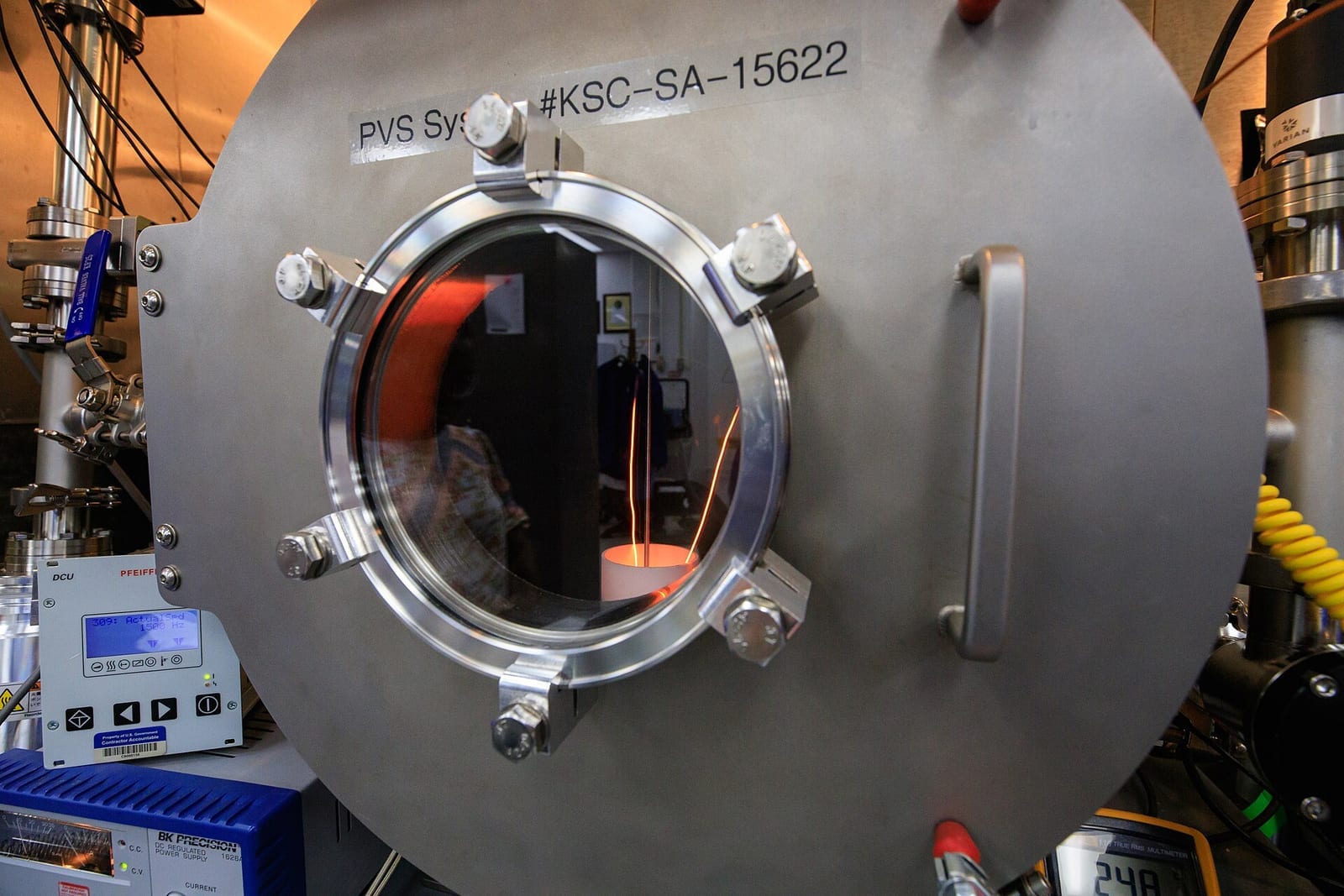
In-situ resource utilization (ISRU) means making what you need from local material. Lunar regolith is roughly 40–45% oxygen by mass, bound up in oxides. Several processes — molten regolith electrolysis, hydrogen reduction and others — can free that oxygen for breathing air and rocket oxidizer. NASA, ESA and companies have demonstrated these at laboratory scale; the challenge is running them reliably, at useful rates, in vacuum and lunar gravity.
08ISRU: polar water extraction
The bigger prize is water ice in the permanently shadowed craters near the poles. Water gives drinking water, oxygen and — split into hydrogen and oxygen — rocket propellant. Extracting it is genuinely hard: the ice sits in the dark at temperatures near −200 °C, possibly cemented into the regolith rather than lying in easy sheets.
- Prospecting first. Rovers and CLPS instruments such as NASA’s PRIME-1 drill and VIPER-class rovers aim to measure how much ice there is and in what form.
- Extraction concepts range from heating the regolith to release vapour to physically mining and processing icy soil.
- Water electrolysis then splits it into hydrogen and oxygen for propellant and life support.
09Surface power and energy storage
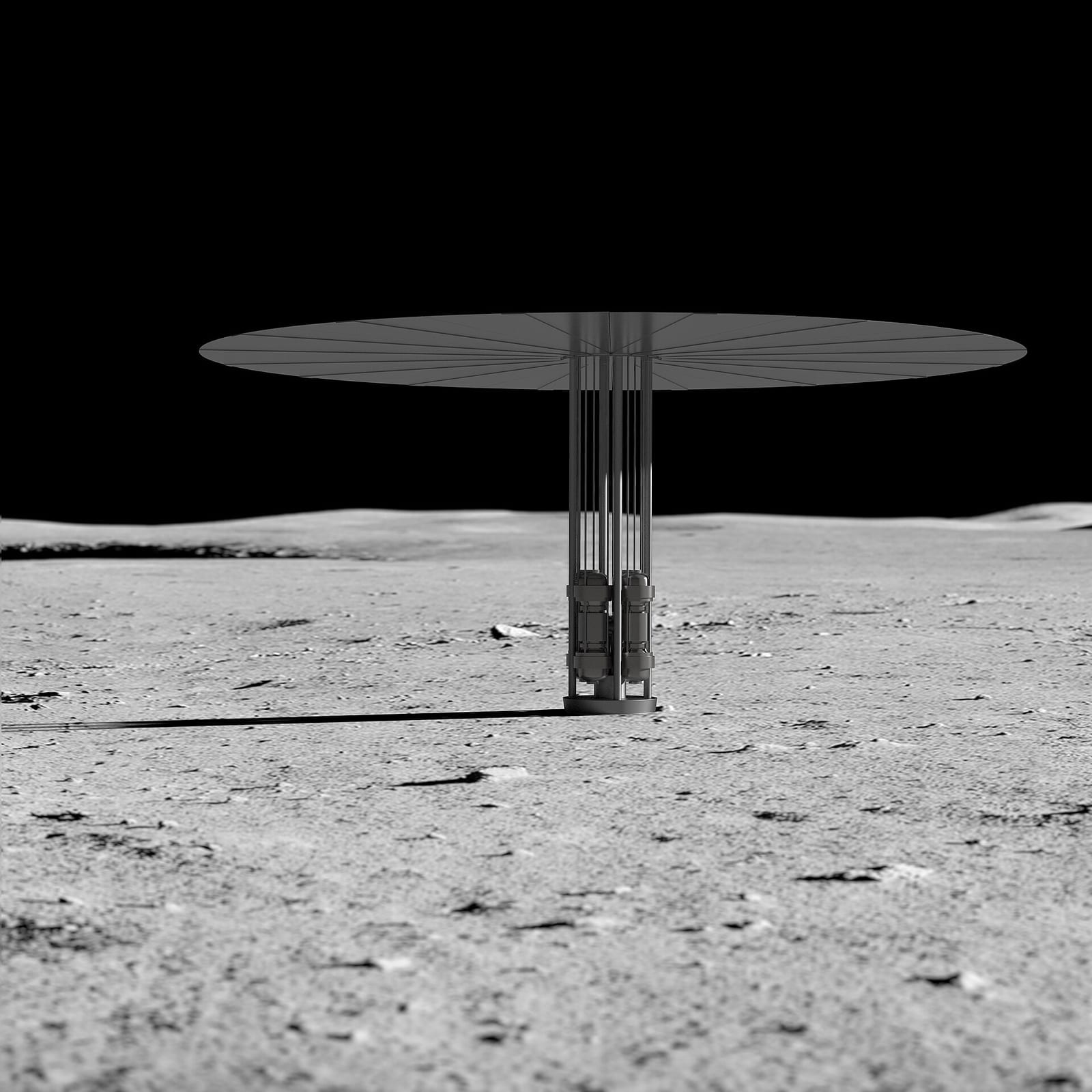
Power is the hardest utility on the Moon, because there is no fuel to burn and the night lasts about 14 Earth days. Missions combine sources and storage.
- Solar arrays, most effective at the poles, where high ridges are lit nearly continuously.
- Fission surface power — NASA’s Kilopower/KRUSTY test proved a compact reactor, and the Fission Surface Power project targets a unit on the order of ~40 kW that runs through night and dust.
- Energy storage — batteries and regenerative fuel cells to carry critical loads through shadow. Storing enough energy for the full lunar night is one of the toughest constraints on a base.
10Cryogenic propellant handling
Several lunar landers use cryogenic propellants — liquid hydrogen or liquid methane with liquid oxygen — which are efficient but boil off in sunlight. Keeping them cold for long missions, and transferring them between vehicles, is a technology that has to mature for the architecture to work.
- Boil-off mitigation — insulation, sunshields and active cooling (“zero boil-off”) to store cryogens for weeks or months.
- Orbital propellant transfer — Starship HLS depends on refuelling in Earth orbit, which requires transferring cryogenic propellant between ships, a capability still being demonstrated.
11Autonomy and robotics
Even with only a 1.3-second signal delay, crews are scarce and expensive, so much lunar work must run on its own or under light supervision. Autonomy and robotics do the prospecting, hauling and building before and between human visits.
- Autonomous landing and driving, so landers avoid hazards and rovers traverse without step-by-step commands.
- Teleoperated and robotic construction — remotely or autonomously moving regolith, deploying arrays and building berms.
- Robotic arms and logistics — Canada’s Canadarm3 will service the Gateway station largely autonomously.
12Surface construction with regolith
Shipping every wall and landing pad from Earth is prohibitively heavy, so agencies are developing ways to build with what is on the ground. Regolith can be sintered, melted or bound into solid structures.
- Regolith 3D printing — NASA and ESA study printing berms, landing pads and habitat shells from local soil.
- Sintering and microwaving to fuse loose dust into hard surfaces that suppress dust kicked up by landings.
- Berms and blast shields to protect a base from debris thrown by nearby landings.
13Thermal management
The Moon swings from well above the boiling point of water in daylight to about −130 °C at night, with permanently shadowed craters near −200 °C. Keeping electronics, batteries and crews within limits across that range — and surviving the two-week night without freezing solid — drives much of a system’s design.
- Radiators, heat pipes and multilayer insulation to dump heat by day and hold it by night.
- Survival heaters and reactor or stored power to keep hardware above minimum temperatures through the dark.
14Dust mitigation technology
Because it defeated Apollo hardware so quickly, dust mitigation is now a discipline of its own. Lunar dust is abrasive, jagged and electrostatically charged, and it works its way into every mechanism.
- Electrodynamic dust shields that use travelling electric fields to sweep charged grains off surfaces and optics.
- Suit-ports and airlocks that keep dusty suits outside the habitat, plus dust-tolerant seals and connectors.
- Coatings and materials that resist adhesion and abrasion.
15Gateway and orbital infrastructure
Gateway is a small space station planned for a near-rectilinear halo orbit around the Moon. It serves as a staging point where Orion and landers meet, a comms relay, and a platform for science — and it is a major international contribution to the technology of a sustained return.
16Human landing systems compared
Approximate, as both landers evolve. Figures are targets, not flight-proven values.
| Feature | Starship HLS (SpaceX) | Blue Moon (Blue Origin) |
|---|---|---|
| Selected | 2021 (first crewed lander) | 2023 (second provider) |
| Propellant | Liquid methane + oxygen | Liquid hydrogen + oxygen |
| Refuelling approach | Refuel in Earth orbit before heading to the Moon | Cislunar transporter / refuelling architecture |
| Reusability goal | Fully reusable vehicle line | Reusable lander with refuelling |
| Role | Early Artemis crewed landings | Later Artemis crewed landings |
17Interesting facts
- Lunar regolith is roughly 40–45% oxygen by mass — the Moon is, in a sense, made largely of breathable material locked in rock.
- The first US soft landing since Apollo was made by a commercial vehicle, Intuitive Machines’ Odysseus, in 2024.
- The radio delay to the Moon is only about 1.3 seconds each way, versus 3–22 minutes for Mars.
- NASA test-fired a real space fission reactor, KRUSTY, in 2017–2018 as part of the Kilopower project.
- A pressurized rover could let two astronauts live and drive for days, turning surface exploration into road trips.
18Glossary
| Term | Definition |
|---|---|
| HLS | Human Landing System — the crewed lander that takes Artemis astronauts to the surface. |
| CLPS | Commercial Lunar Payload Services — NASA’s program buying rides on commercial robotic landers. |
| ISRU | In-situ resource utilization — making oxygen, water or fuel from local material. |
| Regolith | The loose, dusty, broken rock covering the lunar surface. |
| PSR | Permanently shadowed region — a crater floor that never sees sunlight, cold enough to trap ice. |
| LunaNet | NASA’s interoperability framework for lunar communications and navigation. |
| PNT | Positioning, navigation and timing — knowing where and when you are without Earth GPS. |
| LTV | Lunar Terrain Vehicle — an unpressurized rover for suited astronauts. |
| AxEMU | Axiom Extravehicular Mobility Unit — the next-generation Artemis surface spacesuit. |
| Fission surface power | A small nuclear reactor delivering steady electricity on the surface, independent of sunlight. |
Continue exploring
19Frequently asked questions
What is the Human Landing System (HLS)?
It is the crewed lander that carries Artemis astronauts from lunar orbit to the surface and back. NASA selected a lunar Starship (2021) and Blue Origin’s Blue Moon (2023) as the two providers.
What is CLPS?
Commercial Lunar Payload Services — a NASA program that buys delivery to the Moon on commercial robotic landers, spreading cost and risk across many small, frequent missions.
Has a commercial company landed on the Moon?
Yes. Intuitive Machines’ Odysseus made the first commercial soft landing in February 2024, and Firefly’s Blue Ghost landed in 2025. Not every attempt has succeeded.
What spacesuit will Artemis astronauts wear on the Moon?
NASA contracted Axiom Space’s AxEMU for the first surface landing — a suit designed for the south-polar cold, dust and greater mobility than Apollo suits allowed.
How do you extract oxygen from the Moon?
Lunar regolith is about 40–45% oxygen by mass, bound in oxides. Processes such as molten regolith electrolysis or hydrogen reduction free that oxygen; all are proven in the lab and being scaled up.
How would water be mined on the Moon?
By prospecting the permanently shadowed polar craters, then heating or physically processing the icy regolith to release water. Missions like PRIME-1 and VIPER-class rovers aim to measure how much ice is accessible.
How does a base get power through the 14-day lunar night?
Through a mix of polar solar with battery or fuel-cell storage, or a surface fission reactor that runs regardless of sunlight. Storing enough energy for the full night is one of the hardest constraints.
What is LunaNet?
A NASA framework of interoperability standards so that communications and navigation services from many providers work together at the Moon — effectively a “lunar internet and GPS”.
Why can’t lunar missions just use GPS?
Earth’s GPS satellites do not usefully cover the Moon. Missions need their own positioning and navigation (PNT) plus relay satellites for the far side and deep polar craters.
What is the difference between the LTV and the pressurized rover?
The LTV is an open, unpressurized buggy for suited astronauts on short trips; the pressurized rover is a mobile habitat that lets crews drive for days without suits. Japan is to provide the pressurized “Lunar Cruiser”.
Why is cryogenic propellant handling a challenge?
Liquid hydrogen, methane and oxygen boil off in sunlight, so storing them for long missions and transferring them between vehicles (as Starship HLS needs in Earth orbit) requires insulation, cooling and transfer techniques still being demonstrated.
Can structures be built from lunar soil?
Yes, in principle. Regolith can be sintered, melted or 3D-printed into landing pads, berms and habitat shells. Agencies have demonstrated it on the ground; doing it reliably on the Moon is the next step.
What is Gateway?
A small space station planned for orbit around the Moon, serving as a meeting point for Orion and landers, a communications relay and a science platform, built with international partners.
How much of this technology actually exists yet?
A mix. Robotic landers, some suits and reactor tests are flight-proven or demonstrated; large crewed landers, orbital refuelling, ISRU at scale and night-surviving power are still in development, and dates remain targets.