01The quick answer
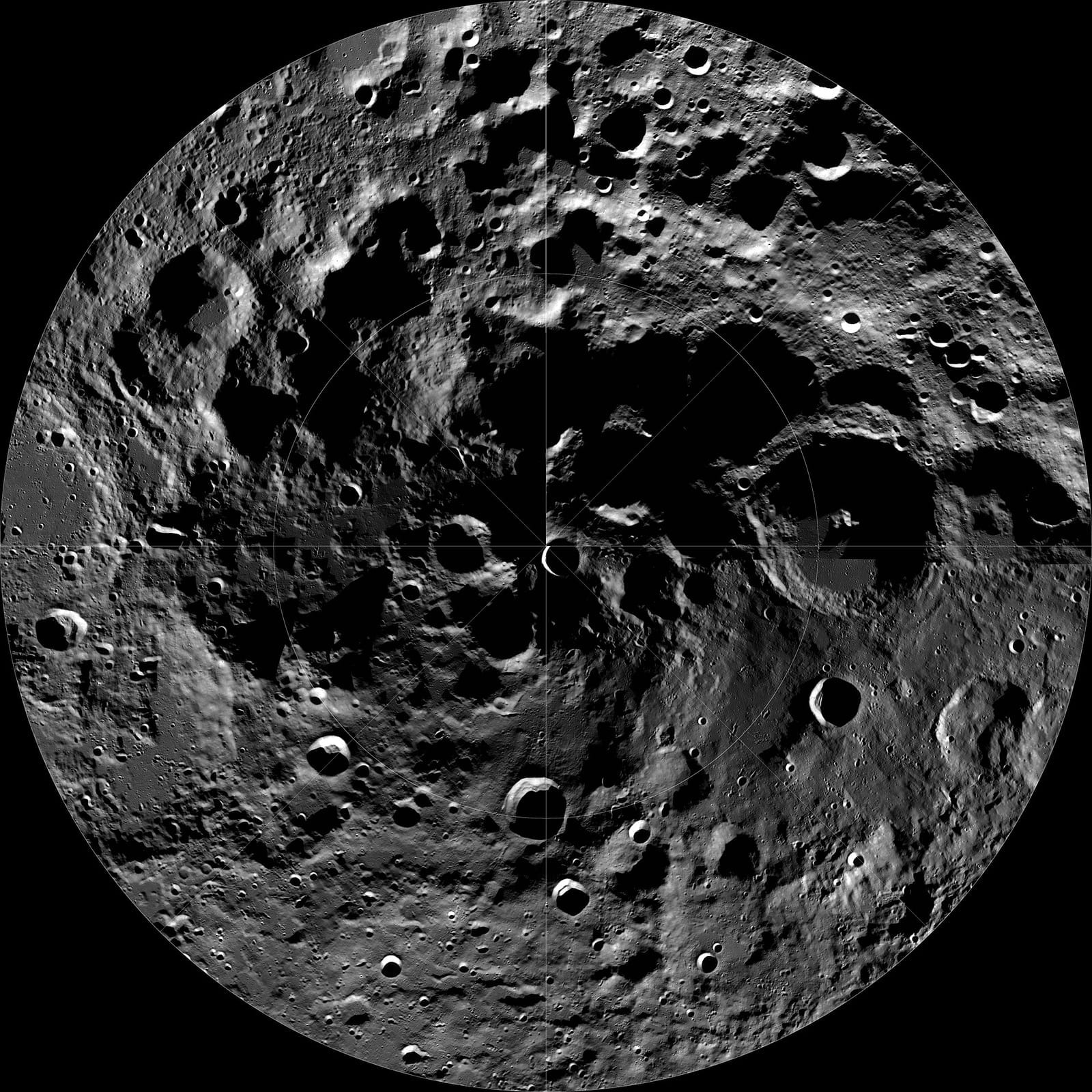
There is water on the Moon — that much is settled science. But it is not lakes or flowing streams. Most of it is water ice frozen into the floors of craters near the lunar poles that never receive sunlight, mixed in with the rock and dust. There are also small amounts of water and a related molecule, hydroxyl, chemically bound into the sunlit soil across much of the surface.
This was not always known. For most of the twentieth century the Moon was assumed to be bone-dry. A run of missions from the 1990s onward — and especially in 2009 — overturned that, and today the open questions are about how much water there is, exactly where, and how hard it will be to use.
02What form the water takes
Lunar water is not one thing in one place. Scientists distinguish several distinct reservoirs, and they matter differently for future missions.
- Polar ice in permanent shadow. The richest and most useful reservoir: water ice mixed into the soil on the floors of polar craters that never see the Sun. This is the water future bases would most likely mine.
- Water and hydroxyl in sunlit soil. Across much of the surface, tiny amounts of water (H₂O) and hydroxyl (OH) are bound into the grains of regolith — far too little to scoop up easily, but real.
- Water inside volcanic glass and minerals. Some water is locked inside ancient volcanic glass beads and minerals, a trace of the Moon’s interior rather than a usable surface supply.
03Permanently shadowed regions: the cold traps
The Moon barely tilts on its axis, so near the poles the floors of deep craters can sit in permanent darkness — regions that have not seen sunlight for billions of years. Scientists call them permanently shadowed regions, or PSRs.
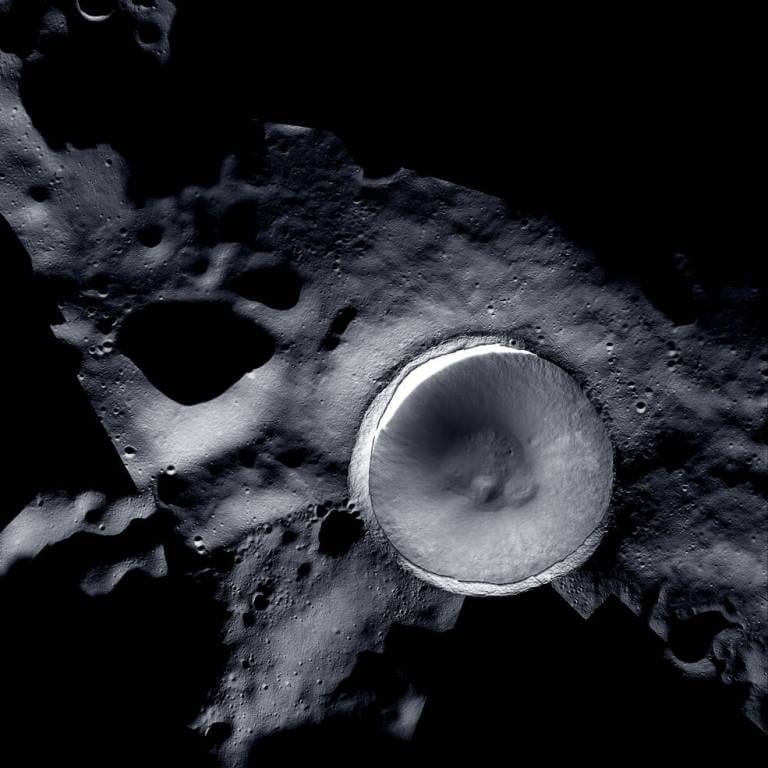
Inside a PSR the temperature can fall to around −240 °C — colder than the surface of Pluto. At that temperature water ice does not evaporate away; it stays put essentially forever. Any water delivered by comets, asteroids or the solar wind over billions of years, and which happened to drift into one of these traps, is still there. That is why the poles, not the equator, are the target for water prospecting.
Why the ice is so hard to reach
The same permanent darkness that preserves the ice makes it brutally difficult to work with: no sunlight for solar power, extreme cold that stresses machinery, and rugged crater floors. Any mining operation would have to bring its own power and survive conditions harsher than anywhere a rover has driven before.
04How we found it: a chain of missions
The case for lunar water was built up mission by mission, from first hints in the 1990s to direct confirmation in 2009 and refinements since.
| Mission / instrument | Year | What it found |
|---|---|---|
| Clementine | 1994 | Radar hints of possible ice at the south pole (debated) |
| Lunar Prospector | 1998 | Neutron data showing hydrogen concentrated at the poles |
| Chandrayaan-1 (Moon Mineralogy Mapper) | 2009 | Detected water and hydroxyl bound in sunlit soil |
| LCROSS | 2009 | Confirmed water ice by impacting Cabeus crater |
| LRO (LAMP, Diviner, LEND) | 2009– | Mapped shadow, temperature and hydrogen at the poles |
| SOFIA (airborne telescope) | 2020 | Detected molecular water in sunlit high latitudes |
The turning point came in 2009. India’s Chandrayaan-1 carried NASA’s Moon Mineralogy Mapper (M³), which detected the spectral signature of water and hydroxyl bound into the sunlit surface. Months later, NASA’s LCROSS mission deliberately crashed a spent rocket stage into the permanently shadowed Cabeus crater and flew a second craft through the debris plume — and measured clear evidence of water ice. NASA’s Lunar Reconnaissance Orbiter (LRO) has since mapped the shadows, temperatures and hydrogen of the polar regions in detail, and in 2020 the SOFIA airborne observatory reported molecular water (H₂O) in sunlit high latitudes, showing water is not confined to the deep shadows alone.
05How much water is there?
This is where honesty matters most: nobody knows the total precisely. Estimates for the ice hidden in the polar cold traps run into the hundreds of millions of tonnes, but these are broad extrapolations from remote sensing, not measurements of a mapped, ground-truthed deposit.
Why the numbers are so uncertain
Orbiters can sense hydrogen and cold traps from above, but they cannot tell you exactly how much ice sits how deep, how pure it is, or how evenly it is spread. The concentration in the sunlit soil is tiny — often compared to a desert far drier than any on Earth. Turning "there is water" into "here is a deposit worth mining" needs landers and drills on the surface, which is exactly what upcoming missions aim to provide.
06Why lunar water matters so much
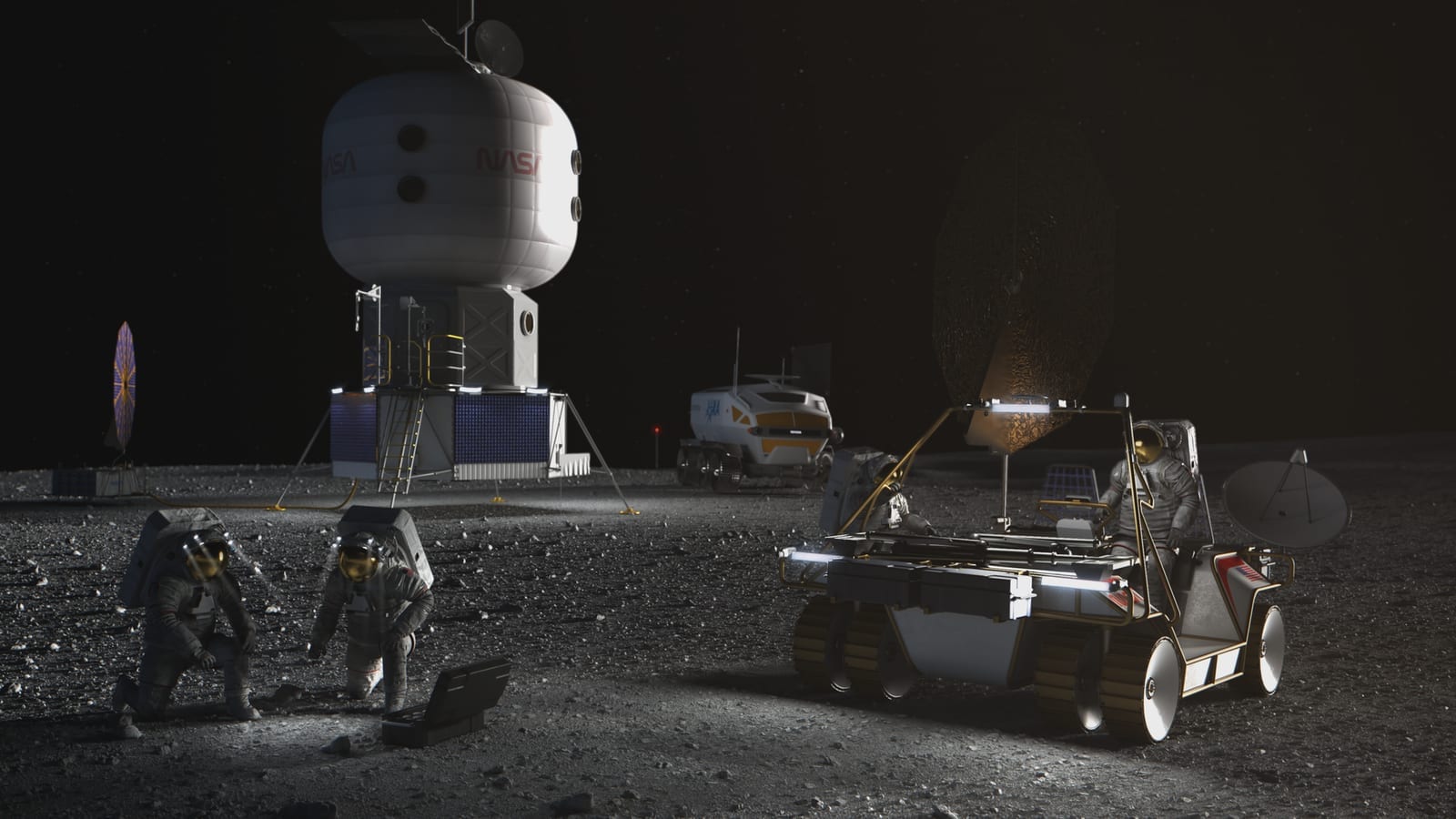
Water is the reason the poles have become the focus of lunar exploration. Anything you can make on the Moon is something you do not have to launch from Earth at enormous cost — and water is unusually versatile.
- Drinking water. The most obvious use — purified lunar ice could supply a crew directly, saving the cost of shipping every litre from Earth.
- Breathable oxygen. Splitting water into hydrogen and oxygen yields oxygen for the crew to breathe.
- Rocket propellant. Hydrogen and oxygen are also a powerful rocket fuel and oxidiser. Making propellant on the Moon — in-situ resource utilisation, or ISRU — could refuel ships for the trip home or onward to Mars.
- Radiation shielding and more. Water is also a good radiation shield and a feedstock for other processes, making it a cornerstone resource for any long-term base.
07The challenges of using it
Knowing the water is there is a long way from turning it into a tank of drinking water or fuel. The obstacles are formidable, and no one has yet mined ice on another world.
- Extreme cold and darkness. Mining happens in permanently shadowed craters near −240 °C, with no sunlight for power — machinery and crews would need their own energy source and heat.
- Unknown distribution. Until landers sample the ground, we do not know how deep, how pure or how concentrated the ice really is — which makes designing extraction equipment guesswork.
- Hard extraction. Ice is mixed into rock-hard, cold soil, not sitting in a convenient layer. Separating and collecting it at scale is an unsolved engineering problem.
- Energy cost. Splitting water into hydrogen and oxygen takes a lot of power, so any propellant plant depends on a substantial energy supply on the surface.
08What comes next
The next phase is about ground truth: sending landers and rovers to the poles to measure the ice directly rather than from orbit. NASA and its partners plan robotic prospecting missions to sniff out and drill into polar deposits, and the crewed Artemis programme targets the lunar south pole precisely because that is where the water is. Whether lunar water becomes a practical resource will be decided on the surface over the coming years.
09Frequently asked questions
Is there water on the Moon?
Yes. It exists mainly as water ice frozen into permanently shadowed craters near the poles, plus small amounts of water and hydroxyl bound into sunlit soil. It was confirmed by a chain of missions, most decisively in 2009.
Is there liquid water on the Moon?
No. There are no lakes or streams. The Moon has no atmosphere to hold liquid water, so it exists as ice in cold traps or as traces bound into soil and rock.
Where is the water on the Moon?
Mostly in permanently shadowed regions — the floors of deep craters near the poles that never see sunlight and stay cold enough to trap ice for billions of years. Traces of water are also spread more widely in sunlit soil.
How was water on the Moon discovered?
Through a series of missions. Clementine (1994) and Lunar Prospector (1998) gave early hints; in 2009 Chandrayaan-1’s Moon Mineralogy Mapper detected water and hydroxyl in the soil and NASA’s LCROSS confirmed ice by impacting Cabeus crater. SOFIA later detected molecular water in sunlit areas in 2020.
What did the LCROSS mission do?
In 2009 LCROSS deliberately crashed a spent rocket stage into the permanently shadowed Cabeus crater and flew a second spacecraft through the debris plume, measuring clear evidence of water ice — the first direct confirmation of ice in a polar cold trap.
What is a permanently shadowed region?
Because the Moon barely tilts, the floors of some deep polar craters never receive sunlight. These permanently shadowed regions can reach about −240 °C, cold enough to trap water ice for billions of years.
How much water is on the Moon?
Nobody knows precisely. Estimates for the polar ice run into the hundreds of millions of tonnes, but these are broad extrapolations from orbital data, not measurements of a surveyed deposit. Landers and drills are needed to pin the figure down.
Where did the Moon’s water come from?
Likely several sources over billions of years: impacts by comets and water-bearing asteroids, and hydrogen from the solar wind reacting with oxygen in the soil. Water that drifted into cold traps was preserved there.
Why does water on the Moon matter?
Because anything made on the Moon does not have to be launched from Earth. Lunar water could provide drinking water, be split into breathable oxygen, and yield hydrogen and oxygen rocket propellant — potentially refuelling ships for the trip home or on to Mars.
What is ISRU?
In-situ resource utilisation — making use of materials found on-site rather than bringing everything from Earth. On the Moon the prime example is extracting water ice and splitting it into oxygen and hydrogen for life support and fuel.
Can astronauts drink water from the Moon?
In principle, once it is extracted and purified. Lunar ice is mixed with soil and other compounds, so it would need processing before it was safe to drink — but the raw material is there.
Why is it so hard to mine lunar ice?
The ice sits in permanently dark craters near −240 °C with no sunlight for power, mixed into rock-hard soil. We also do not yet know how deep or pure it is. Mining it would mean operating in some of the harshest conditions ever attempted.
Which future missions will study lunar water?
NASA and its partners plan robotic landers and rovers to prospect and drill at the poles, and the crewed Artemis programme targets the lunar south pole specifically because of the water there. The goal is to measure the ice directly on the surface.