01The quick answer
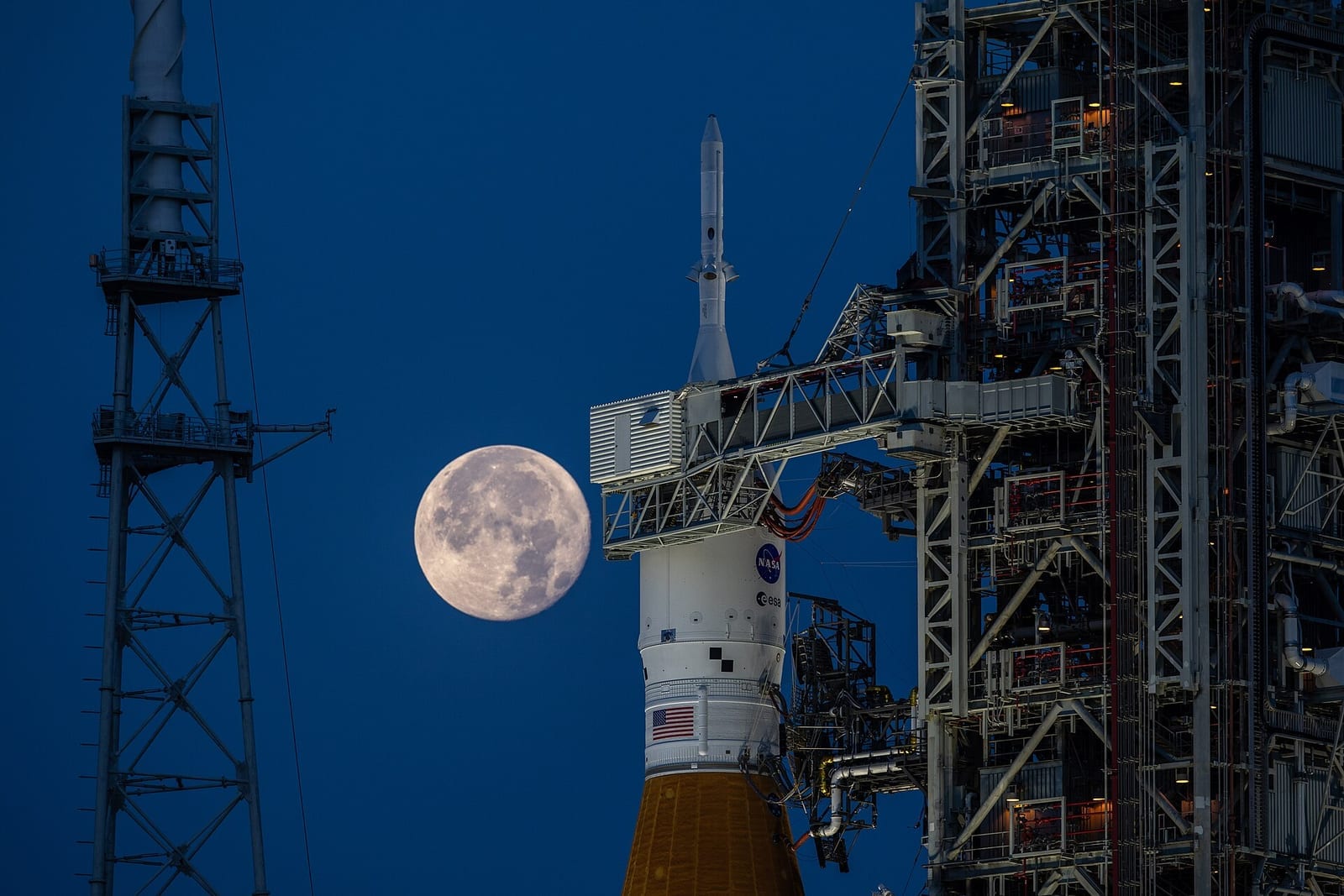
Lunar history falls into three broad chapters. First, an intense space-race era from 1959 to 1976, when the Soviet Luna programme and the US Apollo landings reached the Moon in quick succession. Then a long gap, during which no spacecraft soft-landed on the Moon for most of the rest of the century. And now a renewed era, from the late 2000s onward, driven by new nations and by commercial companies.
The crewed centrepiece today is NASA’s Artemis programme. Its uncrewed first flight, Artemis I, circled the Moon in late 2022, and Artemis II flew four astronauts around it in April 2026 — both established facts. The flights that follow, including the return to the surface, are planned but not yet flown, and their dates have shifted before, so this guide treats them as targets rather than fixed appointments.
02The first era: 1959–1976
The Moon was first reached during the Cold War space race between the Soviet Union and the United States. In less than two decades, humanity went from never having touched another world to walking on it and driving across it.
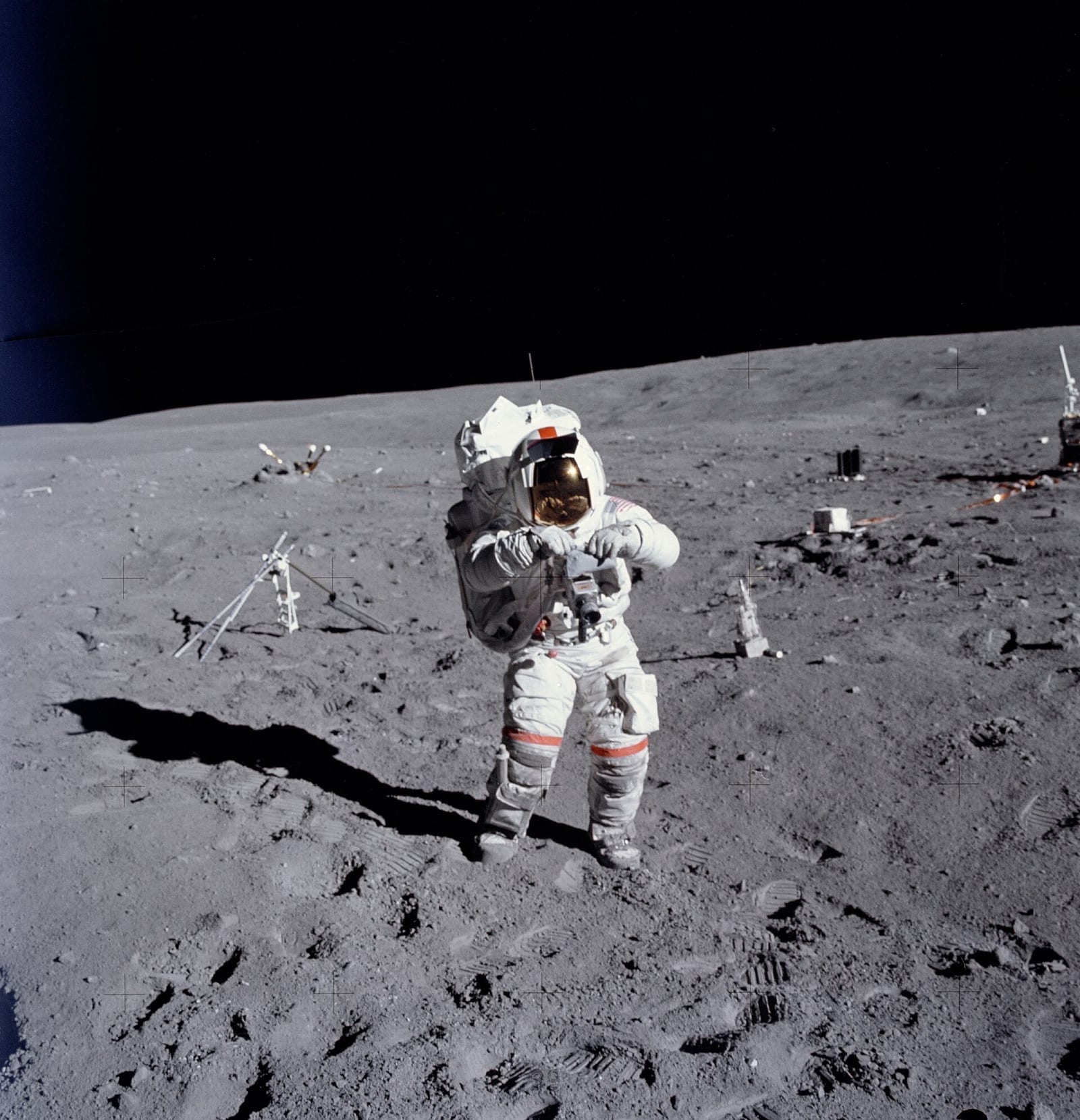
- Soviet Luna programme. Luna 2 became the first spacecraft to reach the Moon in 1959; Luna 3 returned the first photos of the far side that year; Luna 9 made the first soft landing in 1966; and Luna 16 (1970) and later missions returned samples robotically. The last, Luna 24, flew in 1976.
- US Apollo landings. Apollo 8 first carried a crew around the Moon in 1968; Apollo 11 made the first crewed landing on 20 July 1969; and five more landings followed, ending with Apollo 17 in December 1972 — the last time humans stood on the Moon.
- Lunokhod rovers. The Soviet Union also landed the first robotic rovers: Lunokhod 1 in 1970 and Lunokhod 2 in 1973, which drove for kilometres across the surface.
03The long gap
After 1976 the Moon went quiet. With the space race won and the enormous costs no longer justified by geopolitics, crewed lunar exploration stopped entirely, and even robotic landings ceased for a long stretch. No spacecraft made a soft landing on the Moon between the mid-1970s and 2013.
The Moon was not entirely forgotten — orbiters such as the US Clementine (1994) and Lunar Prospector (1998) kept studying it from above, and it was their data that helped reveal signs of polar water. But hands-on exploration of the surface waited for a new generation of spacefaring nations to arrive.
04The renewed era: 2007–today
The current wave of lunar exploration began with orbiters in the late 2000s and has grown into a steady stream of landings by several nations and, most recently, private companies.
- China’s Chang’e programme. Starting with the Chang’e 1 orbiter in 2007, China landed Chang’e 3 with a rover in 2013, achieved the first-ever landing on the lunar far side with Chang’e 4 in 2019, returned samples with Chang’e 5 in 2020, and returned the first samples from the far side with Chang’e 6 in 2024.
- India’s Chandrayaan programme. Chandrayaan-1 (2008) carried the instrument that detected water in the soil. Chandrayaan-2 (2019) reached orbit but its lander crashed. Chandrayaan-3 succeeded in 2023, landing near the lunar south pole.
- Japan’s SLIM. In January 2024 Japan’s SLIM lander touched down, demonstrating precision landing, though it came to rest at an awkward angle.
- Commercial CLPS landers. From 2024, private landers flown under NASA’s Commercial Lunar Payload Services began reaching the surface — including the first commercial soft landing on the Moon that year.
05Artemis: crews return
NASA’s Artemis programme, working with international and commercial partners, aims to return astronauts to the Moon and build toward a sustained presence — this time targeting the resource-rich south pole rather than the equatorial sites Apollo visited.
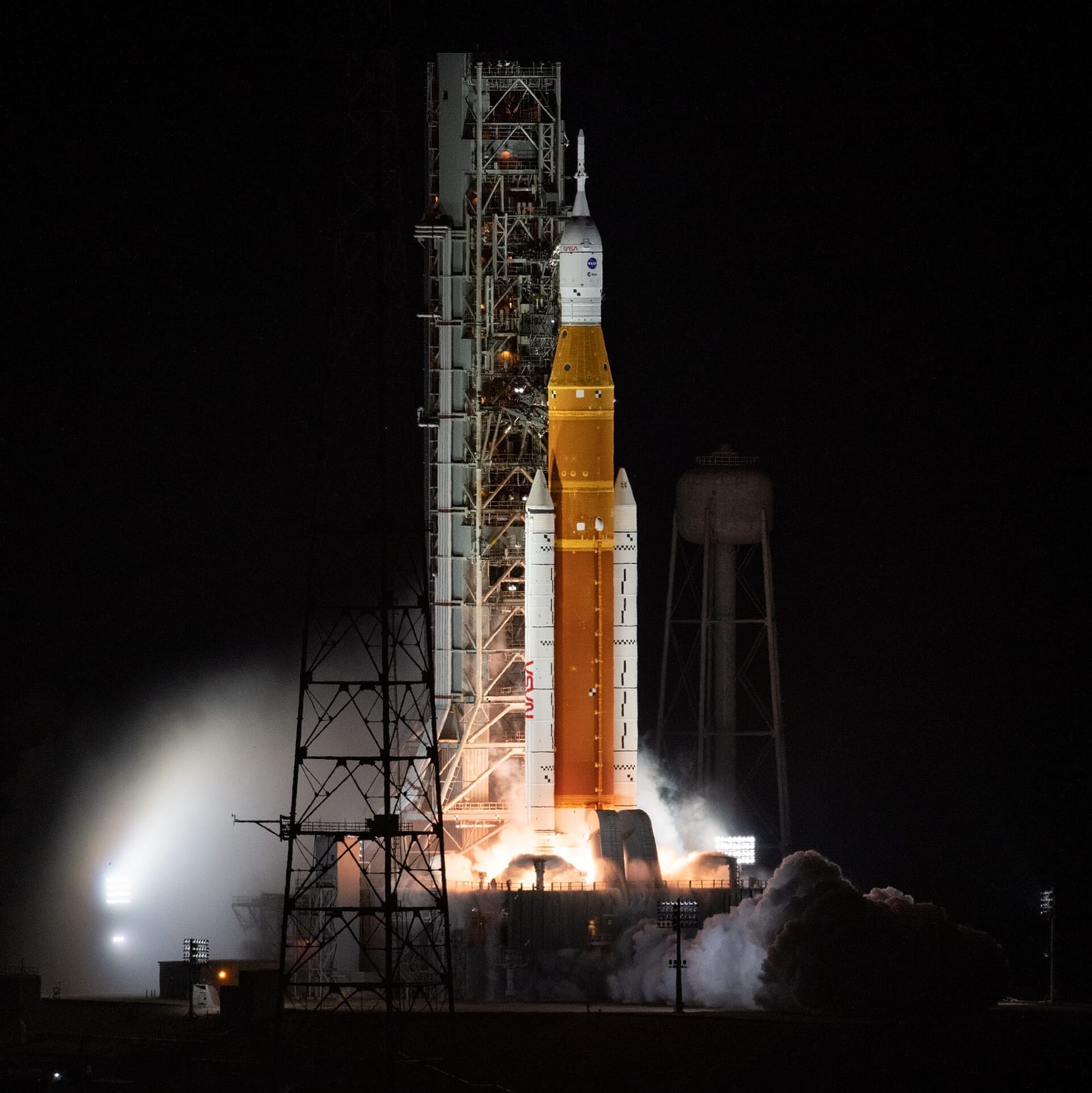
Two flights have already happened. Artemis I was an uncrewed test that launched on 16 November 2022, flew around the Moon and returned on 11 December 2022, proving the Space Launch System rocket and the Orion spacecraft in deep space. Artemis II then carried a crew: it launched on 1 April 2026, flew four astronauts around the Moon on 6 April and splashed down on 10 April, taking them 252,756 miles (about 406,800 km) from Earth — the farthest humans have ever travelled.
The landing is still a target, not a date
On 27 February 2026 NASA re-arranged the campaign. Artemis III, targeted for 2027, is now a crewed test flight in Earth orbit that docks with test versions of the commercial landers, and the first crewed landing since 1972 moved to Artemis IV, targeted for 2028 at the south pole. Those dates are NASA targets that have slipped more than once — treat any specific year as a target, not a guarantee.
06China’s plans and the ILRS
The other major crewed effort is China’s. Having built up a steady record of robotic successes, China has stated its intention to land astronauts on the Moon, and is also leading — with Russia and other partners — a concept for a permanent robotic-then-crewed base.
A crewed landing "around 2030" — per CNSA
According to statements from China’s space agency (CNSA), the country is targeting a crewed lunar landing around 2030. This is an announced goal, not a confirmed flight date, and should be read as such. Alongside it, China and Russia are promoting the International Lunar Research Station (ILRS) — a concept for a permanent base to be built up over the 2030s and beyond, still in planning rather than construction.
07The timeline at a glance
The table below gathers the milestones. Past events are dated firmly; future ones are marked as planned or targeted, with no specific date asserted as fact.
| When | Milestone | Status |
|---|---|---|
| 1959 | Luna 2 reaches the Moon; Luna 3 photographs the far side | Established |
| 1969–1972 | Apollo 11 lands; five more Apollo landings through Apollo 17 | Established |
| 1970–1976 | Lunokhod rovers; last Luna sample return (Luna 24) | Established |
| 2013–2024 | Chang’e landings; Chandrayaan-3; SLIM; first commercial landers | Established |
| Nov–Dec 2022 | Artemis I flies around the Moon (uncrewed) | Established |
| 1–10 Apr 2026 | Artemis II flies four astronauts around the Moon | Established |
| 2027 | Artemis III crewed docking rehearsal in Earth orbit | Targeted, not confirmed |
| 2028 | Artemis IV: first crewed south-pole landing | Targeted, not confirmed |
| Around 2030 | China’s crewed lunar landing (per CNSA statements) | Targeted, not confirmed |
| 2030s+ | International Lunar Research Station (ILRS) build-up | Concept |
08Why lunar timelines slip
Return-to-the-Moon dates have a long history of moving to the right, and it is worth understanding why so you can read any announced schedule with appropriate caution.
- Hardware readiness. New rockets, spacecraft, landers and spacesuits all have to be built and tested; delays in any one of them ripple through the whole schedule.
- Budgets and politics. Programmes depend on year-to-year funding and political priorities that can change, stretching timelines out.
- Safety first. For crewed flights, agencies would rather slip a date than fly before they are confident it is safe — so schedules give way to readiness.
09Frequently asked questions
When did humans first reach the Moon?
A spacecraft first reached the Moon in 1959, when the Soviet Luna 2 impacted the surface. The first crewed landing came a decade later, with Apollo 11 on 20 July 1969.
When did humans last walk on the Moon?
In December 1972, on Apollo 17 — the last of the six Apollo landings. No crew has been to the lunar surface since, though Artemis II carried four astronauts around the Moon in April 2026 without landing.
Why did we stop going to the Moon?
Once the space race was won, the enormous cost of crewed lunar flights was no longer justified by geopolitics, and priorities shifted. Crewed exploration stopped after 1972, and even robotic landings paused for decades.
How long was the gap in lunar landings?
No spacecraft made a soft landing on the Moon between the mid-1970s and 2013, when China’s Chang’e 3 touched down. Crewed landings have not yet resumed at all.
What is the Chang’e programme?
China’s lunar programme. It began with an orbiter in 2007, landed a rover in 2013, achieved the first far-side landing in 2019 (Chang’e 4), returned samples in 2020 (Chang’e 5) and returned the first far-side samples in 2024 (Chang’e 6).
Did India land on the Moon?
Yes. After Chandrayaan-2’s lander crashed in 2019, Chandrayaan-3 succeeded in 2023, landing near the lunar south pole and making India the fourth country to soft-land on the Moon.
What was Artemis I?
An uncrewed test flight that launched on 16 November 2022, travelled around the Moon, and returned to Earth on 11 December 2022. It proved NASA’s Space Launch System rocket and Orion spacecraft in deep space.
Where does Artemis stand now?
Artemis II has flown: it carried four astronauts around the Moon between 1 and 10 April 2026. Next up are Artemis III, a crewed docking rehearsal in Earth orbit targeted for 2027, and Artemis IV, the first crewed landing, targeted for 2028 at the south pole. Those two are NASA targets that have slipped before, so any specific year is a target, not a guarantee.
Will the first Artemis landing be at the south pole?
That is the plan — and since February 2026 that landing is Artemis IV rather than Artemis III. Artemis is targeting the lunar south pole region because of its water ice and near-permanent sunlight on some ridges — a very different destination from the equatorial sites Apollo visited.
Is China planning to land astronauts on the Moon?
Yes. According to statements from its space agency, CNSA, China is targeting a crewed lunar landing around 2030. This is an announced goal rather than a confirmed flight date.
What is the ILRS?
The International Lunar Research Station — a concept led by China and Russia for a permanent lunar base, to be built up robotically and later crewed over the 2030s and beyond. It is currently a plan and set of agreements, not a facility under construction.
Which countries have soft-landed on the Moon?
The Soviet Union and the United States in the space-race era, then China (from 2013) and India (2023). Japan achieved a precision landing in 2024, and the first commercial landers reached the surface the same year.
Why do return-to-the-Moon dates keep slipping?
New hardware takes time to build and test, budgets and political priorities change, and for crewed flights agencies will delay rather than fly before they are confident it is safe. That is why announced dates should be read as targets.